
Buying Durable Fire Pit Cooking Tools: 2026 Guide

Table of Contents
- What Separates Durable Fire Pit Cooking Tools From Disposable Ones
- Essential Campfire Cooking Equipment for Open-Fire Cooking
- Choosing a Campfire Grill Grate That Won't Warp
- Why an Adjustable Campfire Grill Beats a Fixed Grate
- How to Clean Campfire Cooking Equipment After Every Trip
- Matching Durable Fire Pit Cooking Tools to How You Actually Cook
- Conclusion
- Frequently Asked Questions
Last Updated: October 10, 2026
What Separates Durable Fire Pit Cooking Tools From Disposable Ones
Most people buying durable fire pit cooking tools learn the difference the hard way: the grate warps on the third trip, the welds crack, and the whole thing ends up in a landfill by fall. At AdjustaGrill, we've built open-fire equipment since 1994, so we've watched thousands of grates fail in exactly the same places. This guide breaks down what actually determines whether campfire cooking equipment survives a decade or dies in one season.
The short answer: steel gauge, weld quality, and the specific parts that take the most heat. A grate made from thin rod stock will bend under a cast iron Dutch oven. A stake welded with a single pass will snap where the arm meets the post. Durable gear is heavier, simpler, and usually built by someone who has actually cooked over coals.
U.S. Forest Service guidance on campfire safety and equipment
Steel Gauge, Welds, and the Parts That Fail First
Steel gauge is the thickness of the metal used in a grate or stake. Lower gauge numbers mean thicker steel, and thicker steel resists warping under direct flame and heavy cookware.
Three failure points show up again and again:
- Grate bars bend first when they're under 3/16 inch thick and you set a full Dutch oven on them
- Weld joints at the arm-to-post connection crack after repeated heating and cooling cycles
- Stake tips dull or bend if the metal is soft, making them hard to drive into packed ground
A common mistake is judging a grate by how it looks in the box. Pick it up. If it flexes in your hands, it will flex over a fire.
Essential Campfire Cooking Equipment for Open-Fire Cooking
The core kit for open-fire cooking is smaller than most people think: a heat-resistant grate or stake grill, long-handled tongs, a cast iron skillet or Dutch oven, heat-resistant gloves, and a way to manage coals. Everything else is optional.
What separates a working kit from a frustrating one is how the tools handle two things: direct flame and weight.
Tools That Handle Direct Flame and Cast Iron Weight
Cast iron is the real test. A loaded 12-inch Dutch oven can weigh well over 15 pounds, and that weight sits on a grate at 500°F or more. Thin grates sag. Thick ones hold.
- Stake grills with a swing-away arm let you move food off the heat without lifting the whole grate
- Long-handled tongs keep your hands clear of flare-ups
- Leather or aramid gloves beat cotton, which scorches
- A charcoal chimney removes the need for lighter fluid entirely
Choosing a Campfire Grill Grate That Won't Warp
A campfire grill grate won't warp if the bars are thick enough and the frame is welded, not just bent. Look for at least 3/16-inch bar stock and a frame that ties the bars together on all sides.
Here's what to check before you buy:
| Feature | Weak Sign | Durable Sign |
|---|---|---|
| Bar thickness | Flexes by hand | Rigid, no give |
| Welds | Single tack, visible gap | Full bead, smooth |
| Frame | Open ends | Closed, welded loop |
| Finish | Painted | Bare or high-heat coated |
The practical difference shows up fast. A rigid grate holds a skillet steady, so you're not chasing your food around a sagging surface. That matters more than any spec sheet suggests.
Why an Adjustable Campfire Grill Beats a Fixed Grate
An adjustable campfire grill beats a fixed grate because it lets you control heat by distance, not by guesswork. Raise the grate to cool the cook, lower it to sear. A fixed grate gives you one temperature: whatever the fire decides.
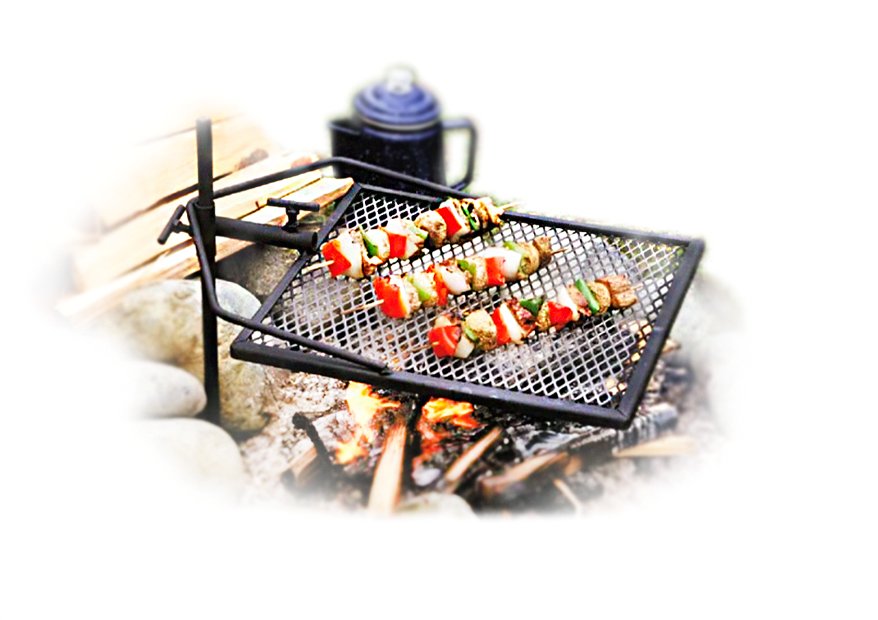
This is where most gear reviews miss the point. They compare bar counts and coating. The real variable is control. AdjustaGrill's patented stake design, protected under US Patent Des. 369,939, uses a swing-away arm so you can move food off the flame in one motion, then swing it back. That single feature is the difference between burning dinner and cooking it.
How to Clean Campfire Cooking Equipment After Every Trip
Cleaning campfire cooking equipment after every trip prevents rust, removes creosote, and keeps your gear ready for the next fire. Skip it and you'll be scraping carbon off a pitted grate next season.
A simple routine:
- Let the grate cool completely, then brush off ash with a wire brush
- Scrub cooking surfaces with hot water and a stiff brush; skip soap on cast iron
- Dry everything immediately with a rag
- Wipe bare steel with a thin coat of food-safe oil
- Store in a dry bag, not a damp tote
The thing nobody tells you about cleaning open-fire gear is that moisture, not heat, does the real damage. A grate left wet overnight rusts faster than one used hard all weekend.
National Park Service guidance on Leave No Trace campfire practices
Matching Durable Fire Pit Cooking Tools to How You Actually Cook
Match your tools to your cooking style, not to the biggest kit on the shelf. A weekend fire pit cook needs different gear than a river guide feeding a group every day.
- Backyard fire pit, casual use: a single adjustable stake grill covers most meals
- Car camping and tailgates: a collapsible grate plus long-handled tools packs flat
- Group and commercial use: heavier stake grills that handle cast iron and repeated packing
AdjustaGrill builds for that last category, and it holds up for the first two because the construction doesn't change. Every unit carries a lifetime warranty, and the design has been field-proven since 1994.
Conclusion
The hardest part of buying durable fire pit cooking tools is trusting a brand you haven't used. AdjustaGrill answers that with a patented swing-away design, heavy-duty construction that handles cast iron, and a lifetime warranty on every grill. From casual backyard nights to commercial river trips, our stake grills and portable fire pits are built to outlast the fire.
Shop now and cook over open flame with gear that's ready for every trip.
Frequently Asked Questions
What material is best for fire pit cooking tools?
Stainless steel and cast iron hold up best over open fire. Stainless steel resists rust and handles direct flame without flaking, while cast iron holds heat evenly for searing and Dutch oven cooking. Avoid chrome-plated or thin aluminum tools, which warp, chip, or melt at fire pit temperatures. Look for 304-grade stainless or uncoated cast iron, and check that handles are solid metal rather than hollow tubing that traps moisture and rusts from the inside.
How do you choose a durable campfire grill grate?
Check three things: bar thickness, weld quality, and coating. Grates with bars under 3 millimeters bend under a heavy skillet; thicker bars hold their shape. Welds should be smooth and continuous, not spot-tacked. Skip painted or chrome finishes since they flake into food. A campfire grill grate with a lifetime warranty and a design that has been sold unchanged for years is a stronger signal of durability than a low price.
How do you clean and maintain fire pit cooking tools?
Scrub tools with a stiff brush and hot water while they are still warm, then dry them completely to prevent rust. For cast iron, wipe with a thin layer of cooking oil after each use. Never soak wooden handles or leave gear outside overnight, since dew accelerates corrosion. Store everything dry and inspect welds and joints at the start of each season. This routine takes about ten minutes per trip and is the main reason quality gear lasts decades.
Can you use regular barbecue tools over an open fire?
Most backyard barbecue tools are not built for open fire. Their chrome plating, plastic handles, and thin metal warp or melt at campfire temperatures, and long-term exposure to direct flame shortens their life dramatically. Dedicated campfire cooking equipment uses heavier steel and heat-safe handles designed for coals and flame. If you already own sturdy stainless tongs and spatulas, they can work in a pinch, but a dedicated adjustable campfire grill and fire-rated tools will outlast them by years.
Leave a comment