
How to Clean Cast Iron Campfire Grill

Last Updated: October 23, 2026
Quick Summary
To clean cast iron campfire grill, scrape away food while the grate is warm, scrub with a nylon brush and water, rinse thoroughly, dry completely by the fire, then wipe on a thin coat of oil. This five-minute routine after every use prevents rust and keeps your grate working for decades.
- Scrub with nylon brushes only; wire brushes and steel wool strip seasoning and damage the metal.
- Dry the grate completely using heat from the fire or sun, checking that no cool spots remain underneath.
- Use coarse salt as an abrasive cleaner for stuck-on food instead of soaking or using harsh tools.
- Apply a thin coat of oil after every cleaning to protect the seasoning and prevent rust.
- Packing a damp grate causes flash rust within hours in humid conditions; always dry first.
Table of Contents
- Why Cleaning Your Cast Iron Campfire Grill Matters
- What You'll Need Before You Start
- How to Clean a Cast Iron Grill Grate Step by Step
- How to Remove Stuck-On Food from Cast Iron
- How to Dry Cast Iron Cookware Properly
- How to Season Cast Iron Cookware After Cleaning
- Cleaning Without Running Water at Camp
- Rust Removal and Recovery
- Frequently Asked Questions
Why Cleaning Your Cast Iron Campfire Grill Matters
A dirty cast iron campfire grill doesn't just look bad, it stops working. Leftover food and grease trap moisture, which rusts the metal from the inside out. A grill that's properly cleaned and dried after every use stays functional for decades.
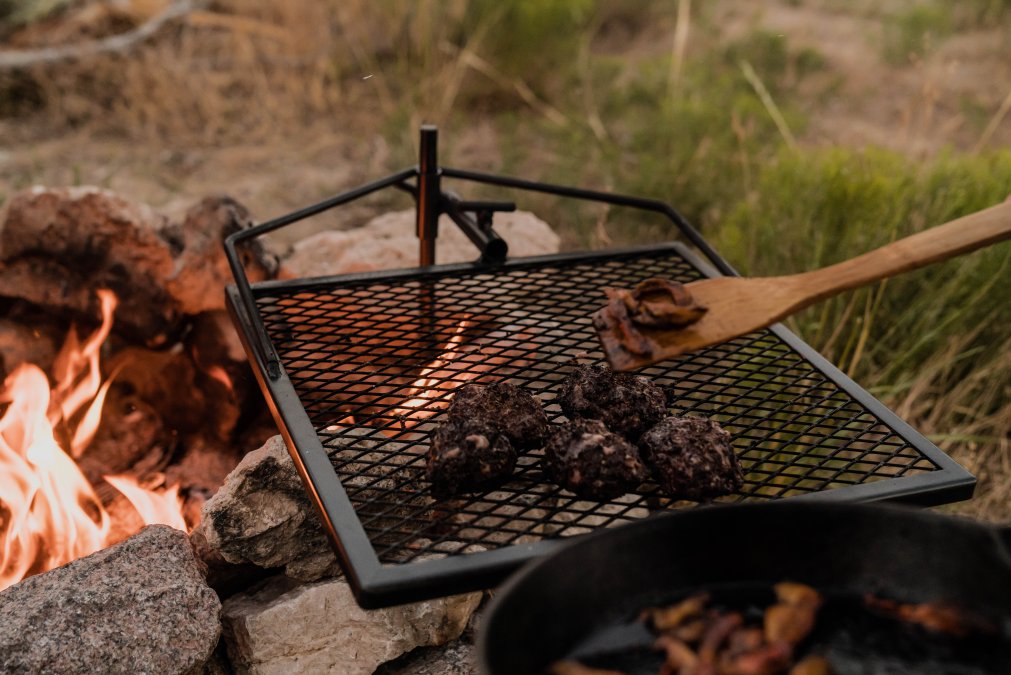
Cast iron is durable, but it needs respect. The seasoning, that dark, slick layer that makes it non-stick and protects it from rust, washes away if you leave grease sitting on the grate.
A simple routine keeps your cast iron grill working like new.
What You'll Need Before You Start
You don't need fancy tools. Here's what works:
- Hot or warm water, the hotter the better, but don't burn yourself
- Nylon brush or scrubber, stiff enough to cut through grease, soft enough not to gouge the metal
- Paper towels or lint-free cloth, for drying and wiping
- Salt, acts as an abrasive cleaner when you don't have running water
- Light oil, vegetable oil, canola oil, or a thin coat of cooking oil for seasoning after cleaning
- Optional: small bowl or bucket, if you're cleaning at camp without a sink
The key is keeping your tools simple. A wire brush or steel wool scrapes away seasoning and damages cast iron. Soap strips away the protective oil layer. Stick with nylon, salt, and water.
How to Clean a Cast Iron Grill Grate Step by Step
How to clean cast iron campfire grill follows the same logic as cleaning any cast iron cookware. The difference is doing it at camp, where you might not have running water or a full kitchen setup.
Remove Leftover Food and Grease
Start while the grate is still warm, but cool enough to touch safely. Scrape away chunks of food with a fork or stick. Wipe the grate with a paper towel to remove loose grease and ash.
This first step matters. If you let grease cool and harden, it bonds to the metal and becomes much harder to remove. Warm grease wipes away easily.
Scrub the Cooking Surface
Pour warm water over the grate. Use your nylon brush to scrub the top surface and between the bars. Work in one direction, then cross-hatch. The goal is to lift off grease and stuck-on residue without gouging the metal.
Scrub for about two minutes. You don't need to make it shine. You just need to remove the buildup that traps moisture.
Rinse Away Debris
Pour clean water over the grate to rinse away loosened food and grease. If you're at camp without running water, use water from a bucket or pot. Pour slowly so the water runs through the bars and carries debris away.
Make sure you rinse the underside too. Grease collects there and accelerates rust.
How to Remove Stuck-On Food from Cast Iron
Stuck-on food happens. You turned your back for two minutes, the fire flared, and now there's a black crust bonded to the grate.
Don't panic. Use salt as an abrasive cleaner. Sprinkle coarse salt directly on the wet grate.
For really stubborn spots, repeat the salt scrub two or three times. Rinse between passes. This takes patience, but it works without damaging the metal.
Never soak cast iron in water. Never use steel wool or wire brushes. Never put it in a dishwasher.
How to Dry Cast Iron Cookware Properly
This step is non-negotiable. Moisture is the enemy. A grate that looks dry can still hold water in the pits, seams, and the underside of the bars, and that hidden moisture is what starts rust overnight.
Wipe First, Then Heat
After rinsing, wipe the grate thoroughly with a clean cloth or paper towels. Get both sides. Wipe between the bars and along the underside where grease and water collect.
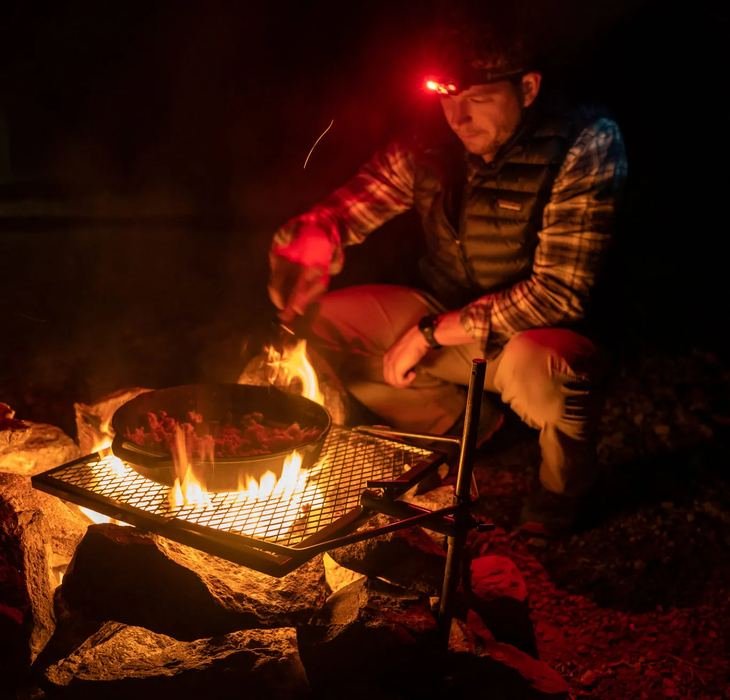
Then use heat. At camp, the fire is your drying tool. Stand the grate on its edge a few feet from the flames, or prop it on two rocks so air moves under it.
If you are breaking camp and the fire is out, lay the grate in direct sun for 10 to 15 minutes.
How to Tell It Is Actually Dry
Do not guess. Use your hand. A fully dry grate feels warm and dry to the touch, with no cool spots. Cool metal means moisture is still evaporating from that area.
A second check: look for a dull, even gray-brown color across the whole grate. Dark patches that stay dark after heating are usually still damp or still holding a film of grease. Either way, they need more attention before you oil.
What Happens If You Pack It Damp
Packing a damp grate is the single most common cause of rust we see. In humid conditions, flash rust can appear within hours. In a dry climate you might get a day.
Adjust-A-Grill | Heavy Duty Patented Portable Campfire Grill Since 1994 →
If you have to pack in a hurry, dry the grate as well as you can, oil it lightly, and wrap it in a dry cloth rather than sealing it in a bag. A cloth lets residual moisture escape. A sealed bag traps it against the metal.
The goal is zero moisture. If it looks dry and feels warm and dry, it is dry. If it feels cool to the touch, there is still water in it.
How to Season Cast Iron Cookware After Cleaning
Seasoning is the protective layer that keeps cast iron from rusting and makes it non-stick.
After your grate is completely dry, apply a thin coat of oil. Use any cooking oil, vegetable, canola, or olive oil. Wipe it on with a cloth or paper towel. Then wipe it off again.
The oil bonds to the hot metal and creates a hard, slick surface. This layer protects against rust.
Do this every time you clean. It takes 30 seconds and makes a huge difference.
Cleaning Without Running Water at Camp
Not every campsite has a sink or running water.
Bring water in a bucket or pot. Heat it over the fire or on your stove.
Use salt as your scrubber. Wet the grate, sprinkle salt on the surface, and scrub with a cloth.
Dry by the fire. After wiping, place the grate near heat to evaporate remaining moisture.
Season with what you have. A dab of cooking oil, bacon fat, or even a bit of butter works.
The principle is the same whether you're at a campsite or at home: remove food and grease, scrub gently, dry completely, and oil lightly. If you're cooking over a CampFire Portable Fire Pit, the same cleanup routine applies, the fire pit's mesh floor and steel pan are just as easy to maintain with salt, water, and a cloth.
Rust Removal and Recovery
If you inherited a rusty grill or left yours dirty too long, rust can be removed. The method depends on how far it has gone.
Stage 1: Surface Rust
Surface rust looks like orange or brown discoloration sitting on top of the seasoning. It has not eaten into the metal yet. Scrub it with coarse salt and a damp cloth, working in circles over the affected area.
If salt alone does not cut it, make a paste of salt and a little water and let it sit on the rust for a few minutes before scrubbing. Do not use steel wool or a wire brush.
Stage 2: Rust in the Pits and Seams
Rust that has started to pit the metal is harder. The pits hold moisture and rust keeps coming back from inside them. Scrub with salt and water, rinse, dry, and oil. Then repeat the oiling weekly for about a month.
A stiff nylon brush helps here. Work it into the pits and along the seams where the bars meet the frame. Do not scrub so hard that you polish the surface smooth. You want the oil to have something to grip.
Stage 3: Rust That Has Eaten Through
If rust has eaten through the grate or created holes, the grate is no longer safe for cooking. Food can fall through, and the weakened metal can fail under a heavy Dutch oven. Replace the grate. There is no safe recovery at this stage.
Prevention Is the Whole Game
Prevention is fast. A five-minute cleanup after every use, scrape, scrub, rinse, dry by the fire, oil thin, stops rust before it starts.
The key to avoiding rust recovery is prevention. A five-minute cleanup after every use stops rust before it starts.

Frequently Asked Questions
Can you clean cast iron while it is still warm?
Yes. Warm cast iron is actually easier to clean than cold. Let it cool just enough to handle safely, then scrub with hot or warm water and a nylon brush. Warm metal helps loosen grease and food residue faster than cold surfaces. Avoid plunging a hot grate into cold water, which can cause warping. Wait until it's warm, not scorching, then clean while the grate is still hot enough to dry itself quickly after rinsing.
Should you use soap to clean cast iron cookware?
Modern dish soap is mild and won't strip seasoning from cast iron the way old lye-based soaps did. A small amount of gentle soap with hot water helps cut through grease and is fine for campfire grates. Focus on rinsing thoroughly and drying promptly. The key is not soaking the grate or leaving it wet, which causes rust. Scrub, rinse, dry, and season lightly with oil if needed.
How often should you season cast iron cookware?
After every cleaning. A light coat of oil applied while the grate is still warm creates a protective layer against rust and keeps the seasoning strong. You don't need much, just a thin film wiped on with a paper towel or lint-free cloth. Let it cool, and the oil will bond to the surface. Regular light seasoning is better than occasional heavy coatings.
What should you do if your cast iron grill grate is left dirty or wet?
Rust can form quickly on cast iron exposed to moisture. If you find rust, scrub it off with a stiff nylon brush or steel wool and warm water, then dry thoroughly and season with oil immediately. For surface rust, a salt-and-oil paste works well, the salt acts as an abrasive while the oil protects the metal. Always store cast iron dry and lightly oiled, and check it before each trip to catch rust early.

Leave a comment