
How to Cook Evenly Over Fire: A Step-by-Step Guide

Table of Contents
- How to Cook Evenly Over Fire: Build the Right Coal Bed First
- How to Control Campfire Temperature with Two-Zone Heat
- Campfire Cooking Grate Height: The Key to Even Heat
- Cooking Over Hot Coals: Timing and Temperature Checks
- How to Cook with Cast Iron Over a Fire
- Troubleshooting Uneven Cooking and Hot Spots
- Frequently Asked Questions
Last Updated: October 12, 2026
How to Cook Evenly Over Fire: Build the Right Coal Bed First
Learning how to cook evenly over fire starts long before food touches the grate. It starts with the fire itself, and more specifically, with the coal bed you build underneath it. This guide from AdjustaGrill draws on more than three decades of building campfire cooking gear to show you a repeatable method for even heat, from coal management to food timing.
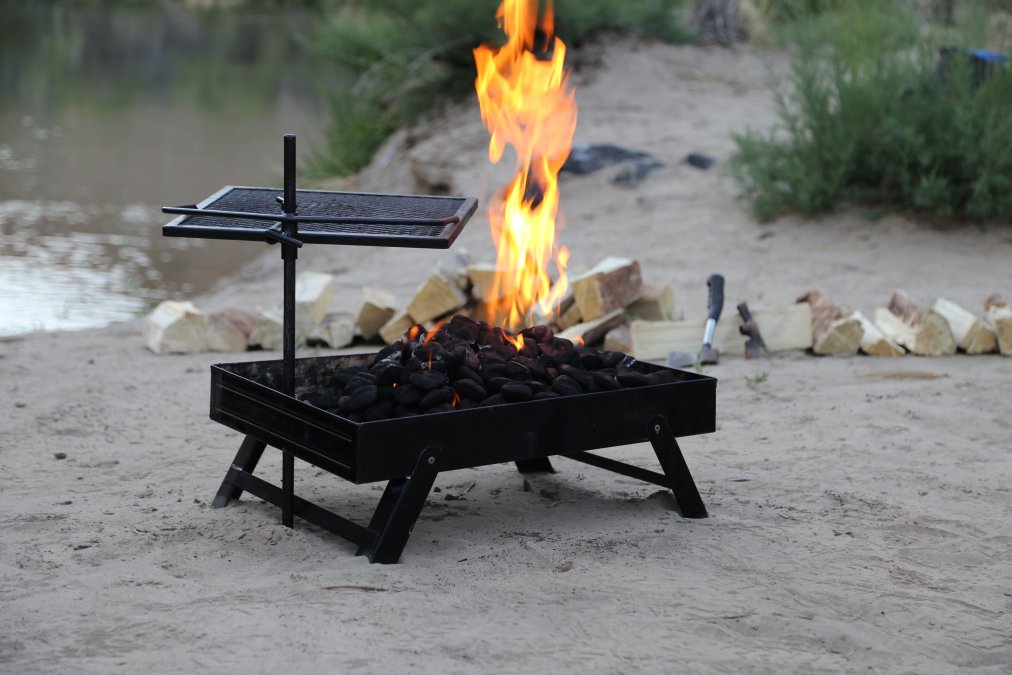
Most uneven cooking comes from an uneven fire. If coals pile up on one side and thin out on the other, one part of your pan runs hot while the rest sits cool. Fix the coal bed first, and half your problems disappear.
Here is the basic sequence we recommend:
- Burn hardwood down to coals, not flames
- Spread coals into an even layer about 1 to 2 inches deep
- Let the coals ash over gray before cooking
- Bank extra coals to one side for a backup heat source
That last step sets up the two-zone method covered in the next section.
Choosing Dry Wood and Managing Smoke
Dry, seasoned hardwood gives you the steadiest coals and the least smoke. Wet or green wood hisses, smolders, and throws inconsistent heat, which makes even cooking nearly impossible.
Stick with hardwoods like oak, hickory, or maple when you can. Softwoods burn fast and leave little usable coal. A common mistake is adding fresh logs right before cooking. That dumps flames and smoke onto your food and wrecks your heat zone.
Keep smoke under control by:
- Feeding small amounts of dry fuel at a time
- Letting wood burn down fully before cooking
- Keeping a clear airflow path under the coal bed
- Avoiding damp or treated wood entirely
Good airflow keeps coals hot and smoke thin. Blocked airflow smothers the fire and creates cool spots.
How to Control Campfire Temperature with Two-Zone Heat
To control campfire temperature, split your fire into two zones: a hot zone of banked coals for searing, and a cooler zone with little or no coal for gentler cooking. This is the single most useful skill for cooking over fire.
Build the hot zone by raking a deep, even layer of glowing coals to one side. Leave the other side mostly bare, with just a thin scatter of coals. Now you have a searing station and a warming station in one fire.
Move food between zones to manage heat without touching the fire. Sear over the hot side, then slide to the cool side to finish. This is how you cook evenly over fire without burning the outside before the inside is done.
Positioning Food Near or Over the Heat
Distance from the coals is your temperature dial. The closer food sits to glowing coals, the faster it cooks and the easier it burns.
Use this rough guide:
| Distance from Coals | Heat Level | Best For |
|---|---|---|
| 2-3 inches | High | Searing steaks, browning |
| 4-6 inches | Medium | Burgers, chicken, fish |
| 8-10 inches | Low | Warming, slow finishing, delicate foods |
Start farther away than you think you need. You can always move food closer, but you cannot unburn it.
Campfire Cooking Grate Height: The Key to Even Heat
Campfire cooking grate height is the most overlooked control you have. Raising or lowering the grate changes the heat hitting your food in seconds, with no need to move coals around.
An adjustable grate lets you fine-tune heat as the fire changes. Coals cool over time, so a grate you can drop lower keeps cooking steady as the fire fades. A fixed grate forces you to rebuild the fire instead.
We built AdjustaGrill around this exact idea. Our patented stake grills feature a swing-away motion so you can check food and adjust height without reaching over open flames. Since 1994, that design has given cooks precise temperature control in the field.
Adjusting for Wind, Weather, and Fire Size
Wind steals heat and pushes flames toward your food. On a breezy day, build your fire lower and use a windbreak of rocks or a log placed upwind.
Cold weather means you need more fuel and a bigger coal bed to hold heat. In damp conditions, expect coals to fade faster, so keep spare fuel ready.
Watch for these adjustments:
- High wind: lower the grate, add a windbreak, use more coals
- Cold air: build a larger coal bed, cook closer
- Rain: raise your setup off wet ground, cover coals when possible
Match fire size to your food. A small coal bed for a single steak, a wide one for a full Dutch oven meal.
Cooking Over Hot Coals: Timing and Temperature Checks
Cooking over hot coals means working with steady, radiant heat rather than leaping flames. Coals give you predictable temperature, which is exactly what even cooking needs.
You can judge coal heat without a thermometer. Hold your palm near grate height and count the seconds you can keep it there:
- 2-3 seconds: hot, ready for searing
- 4-5 seconds: medium, good for most foods
- 6-8 seconds: low, best for slow finishing
For accuracy, use a digital probe thermometer. The USDA food safety guidance lists safe internal temperatures for meat, poultry, and leftovers, and those numbers matter when you cook over an open fire.
Food-Specific Heat and Timing Guidance
Different foods need different heat and timing. Match each one to the right zone and distance.
- Steaks: Sear 2-3 minutes per side over high heat, finish on the cool side
- Burgers: Medium heat, 4-5 minutes per side, flip once
- Chicken: Medium-low heat, longer cook, check internal temp carefully
- Fish: Medium heat on foil or a grate, cooks fast, watch closely
- Vegetables: Medium heat, turn often, ready when tender
Always confirm doneness with a thermometer rather than guessing by color or time alone.
How to Cook with Cast Iron Over a Fire
Cooking with cast iron over a fire gives you the most even heat of any cookware. Cast iron spreads heat across its surface, which smooths out hot spots in your coal bed.
Preheat the pan over coals for a few minutes before adding food. A cold pan dropped onto hot coals creates uneven cooking and sticking. For a Dutch oven, place coals underneath and on the lid to heat from both sides.
A few cast-iron tips:
- Preheat slowly over medium coals
- Use a lid to trap heat and cook evenly
- Rotate the pan a quarter turn now and then for even browning
- Keep a dedicated cooler zone for resting and finishing
AdjustaGrill grills are built to handle cast iron and Dutch ovens, so you can cook a full meal over one fire.
Troubleshooting Uneven Cooking and Hot Spots
Uneven cooking is a heat-distribution problem, not a seasoning problem. Before you change your technique, diagnose the fire. Work through this sequence in order, because each step depends on the one before it.
1. Check the coal bed. Rake the coals flat and look for gaps, piles, and dead spots. A coal bed should be roughly even in depth, about 1 to 2 inches for most cooking.
2. Check airflow. Blocked airflow smothers coals and creates cool spots that never recover. Clear ash from under the coal bed and make sure air can move through the fire.
3. Check grate height. Grate height is your fastest temperature control. If food is scorching on the outside and raw inside, raise the grate or move the food to the cool zone.
4. Check the food itself. Thickness, moisture, and starting temperature all change cooking time. Cold food straight from a cooler cooks unevenly compared to food that has sat out briefly.
5. Check the cookware. Thin pans develop hot spots. Cast iron spreads heat and smooths out an uneven coal bed.
Common problems and their fixes:
- One side burns faster: Coals are piled unevenly. Rake them flat and rotate the food.
- Food sticks and scorches: Grate sits too low or the pan is too thin. Raise the grate and switch to cast iron if you can.
- Everything cooks too slow: Coals have gone cold or airflow is blocked. Clear ash, add dry fuel, and wait for coals, not flames.
- Smoke flavor turns bitter: Flames are hitting the food. Move it to the cool zone and let the fire burn down.
- Hot spots keep forming: Airflow is blocked or the coal bed is too thin. Rebuild the bed and open the draft.
- Undercooked center, burnt surface: Heat is too high. Move to the cool zone, cover, and finish gently.
- Flare-ups: Fat is dripping onto coals. Move the food to the cool zone, trim excess fat, and keep a spray bottle of water nearby for small flare-ups only.
Wind, Weather, and Fire-Size Adjustments
Wind, cold, and damp fuel all change how heat reaches your food, and they are the most common reasons a setup that worked yesterday fails today.
- High wind: Wind steals heat and pushes flames toward the food. Build the fire lower, add a windbreak of rocks or a log upwind, and lower the grate. Expect to use more coals.
- Cold air: A larger coal bed holds heat longer. Cook closer to the coals and keep spare fuel ready.
- Rain or damp conditions: Raise your setup off wet ground and cover coals when possible. Damp fuel smolders and produces inconsistent heat, so keep dry wood in reserve.
- Changing fire size: Match the coal bed to the food. A small bed for a single steak, a wide bed for a Dutch oven meal. As coals fade, drop the grate rather than rebuilding the fire.
A simple rule: when conditions change, change one variable at a time. Adjust grate height first, then coal distribution, then fuel. Changing everything at once makes it impossible to know what fixed the problem.
Frequently Asked Questions
How do you cook food evenly over an open fire?
Build a bed of hot coals rather than cooking over flames, create two heat zones (one hot, one cooler), and adjust your grate height to control how much heat reaches the food. Rotate food a quarter turn every few minutes and use a lid or foil to trap heat on top. The goal is consistent, moderate heat from all sides, not a single intense blast from below.
How do you control the heat when cooking over a campfire?
Control campfire temperature by managing three things: the amount of fuel (coals) under the food, the distance between the food and the coals, and airflow to the fire. Rake coals into a thinner layer to reduce heat or add more coals to increase it. Raise your grill grate to cool things down or lower it to sear.
Should you cook over flames or hot coals?
Hot coals, almost always. Flames produce soot, uneven heat, and unpredictable temperature spikes. Once the fire burns down to glowing embers covered in a fine gray ash, you have a steady, radiant heat source that cooks food evenly and gives you better control. Flames are useful for quick searing or roasting marshmallows, but for anything that needs consistent heat, wait for the coals.
How far should food be from a campfire?
For most foods, position the grate 4 to 6 inches above the coal bed. Thin cuts like fish or vegetables do well at 3 to 4 inches for a quick sear. Thicker items like a whole chicken or a Dutch oven full of stew need 8 to 12 inches so the heat penetrates gradually without burning the outside. Start higher and lower the grate as needed.
Cooking evenly over fire is really a test of setup, not skill. Get the coal bed right, control your grate height, and watch your food closely. AdjustaGrill has spent over 30 years building gear for exactly this: heavy-duty stake grills with a patented swing-away design, a lifetime warranty, and the durability to handle cast iron and Dutch ovens trip after trip. Shop Now and cook your next meal over a fire you can actually control.
Leave a comment