
Portable Campfire Cooking Systems: 2026 Guide

Table of Contents
- What Makes a Portable Campfire Cooking System Worth the Investment
- Best Campfire Cooking Kits for Different Camping Styles
- Campfire Grill with Adjustable Height: Why It Matters for Precision Cooking
- Camping Stove vs Campfire Cooking System: Which Fits Your Needs
- Campfire Cooking Temperature Control: The Essential Skill
- Key Specifications That Matter: Weight, Packability, and Durability
- Safety, Fire Restrictions, and Low-Impact Outdoor Cooking
- Conclusion
- Frequently Asked Questions
Last Updated: October 5, 2026
What Makes a Portable Campfire Cooking System Worth the Investment
A portable campfire cooking system transforms how you prepare meals in the wilderness. Unlike basic campfire grates, these systems offer adjustable height, precise temperature control, and the ability to handle cast iron cookware, the tools serious outdoor enthusiasts actually need.
The real difference between a portable campfire cooking system and a standard grill grate comes down to control. When you're cooking over an open fire, heat fluctuates constantly. A proper system lets you raise or lower your cookware to manage temperature without guessing.
Most casual campers don't realize how much better food tastes when cooked with intention rather than luck. A portable campfire cooking system eliminates the frustration of burnt bottoms and cold centers. You get consistent results, which means you spend less time managing the fire and more time actually enjoying your trip.
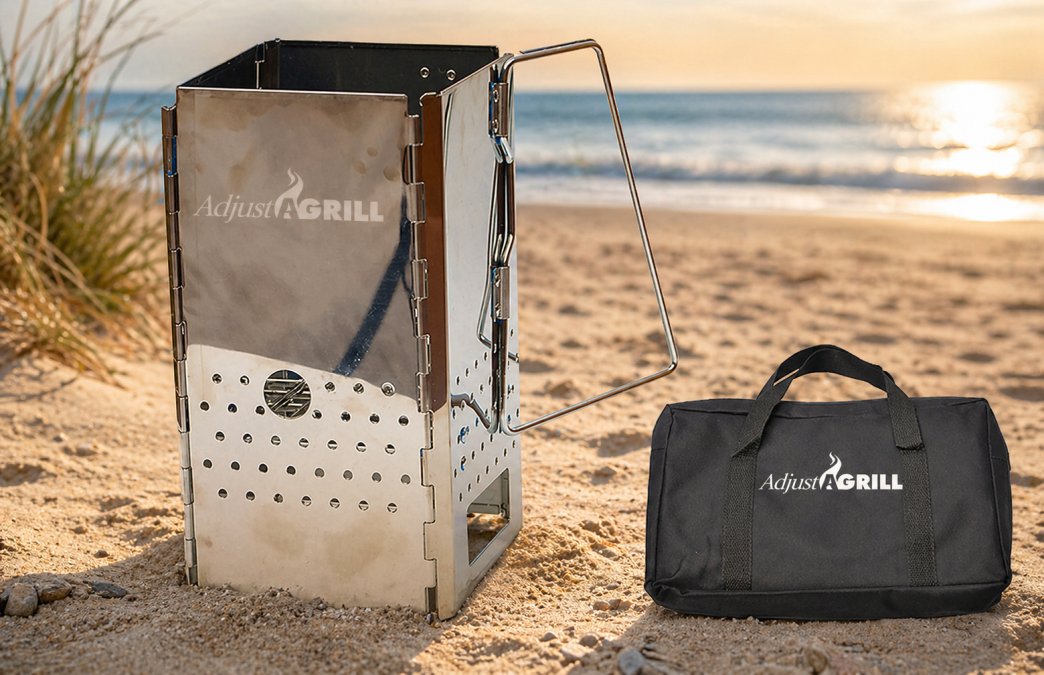
The investment pays for itself in durability. Heavy-duty construction means your system lasts decades, not seasons. A lifetime warranty backs that promise, you're buying once, not replacing gear every few years.
Best Campfire Cooking Kits for Different Camping Styles
Choosing the right portable campfire cooking system depends entirely on how you actually camp. A river guide running commercial trips needs something different from a family doing weekend car camping. The best approach is matching the system to your specific use case, not buying the most expensive option and hoping it fits.
For wilderness expeditions and backpacking: Weight and packability matter most. Adjustable stake grills excel here, they stake into the ground, require minimal footprint, and handle the demands of remote cooking. AdjustaGrill's collapsible designs pack down to fit easily alongside your other gear while maintaining the precision control you need when you're miles from resupply.
For car camping and tailgating: You have room to bring more, so versatility becomes the priority. Look for systems that handle multiple cookware types, Dutch ovens, cast iron skillets, grills. The swing-away motion on quality portable campfire cooking systems lets you adjust without burning yourself.
For commercial guide operations: Reliability under constant use is non-negotiable. Your equipment gets packed in and out daily, handles cooking for groups, and can't fail mid-trip. Professional-grade construction with proven durability in field conditions is essential. River guides and outfitters depend on systems that perform identically on day one and day three hundred.
For backyard fire pits: A permanent or semi-permanent setup lets you invest in features that enhance the experience. Adjustable height becomes a luxury rather than a necessity, and you can focus on cooking performance and aesthetics.
Campfire Grill with Adjustable Height: Why It Matters for Precision Cooking
An adjustable height campfire grill is the feature that separates guessing from cooking. When your grate moves up and down, you control temperature without relying on fire management alone. This single capability changes how food cooks over an open flame.
Here's what most people miss: fire heat is inconsistent. Flames surge and settle. Coals cool gradually. A fixed grate leaves you fighting these variations constantly. An adjustable grill lets you raise cookware when flames spike and lower it when heat drops. You're not fighting the fire, you're working with it.
The practical difference shows up immediately. Meat develops a proper crust instead of charring on the outside while staying raw inside. Sauces simmer instead of scorch. Dutch oven cooking becomes predictable. Cast iron heats evenly rather than spotting with hot and cold zones.
Quality portable campfire cooking systems use smooth adjustment mechanisms, often swing-away designs that let you move cookware without removing it from the fire. This reduces burns and lets you make fine adjustments while actively cooking. No fumbling with chains or struggling with stuck hardware.
The height range matters too. You want enough clearance to hang cookware safely above active flames, but also the ability to position items close enough to use residual heat for gentle warming. A well-designed system gives you this full range of control.
Camping Stove vs Campfire Cooking System: Which Fits Your Needs
This choice determines your entire cooking experience, so it's worth thinking through clearly. Camping stoves and portable campfire cooking systems solve different problems.
A camping stove, whether propane, butane, or liquid fuel, offers speed and consistency. You turn it on, it heats immediately, temperature stays stable. Setup takes minutes. Cleanup is simple.
A portable campfire cooking system connects you to the fire itself. It's slower, requires more attention, and demands you understand fire management. But it delivers something a stove cannot: the experience of cooking over open flames. Food tastes different. The ritual matters. Cast iron performs better.
The practical decision comes down to your priorities. If speed and convenience drive your camping style, a stove wins. If you're willing to invest time in fire management for superior flavor and the full outdoor cooking experience, a portable campfire cooking system is worth it.
Consider also what you're cooking. Boiling water and heating pre-made meals favor a stove. Searing meat, simmering stews, and baking in cast iron favor an open-fire system.
The cost difference is smaller than most expect. A quality portable campfire cooking system from AdjustaGrill costs less than many premium camping stoves, but delivers years of use versus the consumable fuel and replacement parts stoves require.
Campfire Cooking Temperature Control: The Essential Skill
Temperature control separates adequate meals from meals worth remembering. Learning to read fire and adjust your portable campfire cooking system is a skill that compounds over time.
The most direct method is height adjustment. Raising your cookware moves it away from peak heat intensity. Lowering it brings it closer to the hottest zone. Small adjustments create significant temperature changes.
Fire composition matters more than most people realize. Hardwood coals burn hotter and longer than fresh flames. A bed of established coals under your cookware provides more consistent heat than active flames above.
Wind affects fire behavior dramatically. A breeze pulls heat away and cools your cooking surface. Positioning your portable campfire cooking system to use natural windbreaks, rocks, terrain features, your own body, helps stabilize temperature. This is why experienced guides set up consistently rather than randomly.
Timing teaches temperature control better than any explanation. Your first few meals will be imperfect. Your fifth meal will be noticeably better. By your twentieth meal cooked over the same fire type, you'll develop intuition about how adjustments affect results.
Cast iron holds heat longer than steel, which matters for temperature consistency. A properly seasoned cast iron skillet on your portable campfire cooking system maintains temperature better than thin cookware. This is why cast iron is the standard for serious outdoor cooking.
Key Specifications That Matter: Weight, Packability, and Durability
Three specifications determine whether a portable campfire cooking system actually works for your situation: how much it weighs, how small it packs, and how long it lasts.
Weight directly impacts whether you'll actually bring your system. Every pound matters on a backpacking trip. A 3-pound system might come along; a 15-pound system might stay home. For car camping and tailgating, weight matters less, but even then, a lighter system is easier to move and position. AdjustaGrill's stake grills balance durability with weight, heavy enough to handle years of use, light enough to transport without burden.
Packability determines whether your portable campfire cooking system fits with your other gear. A system that collapses flat slides into a pack or vehicle easily. One that doesn't might require dedicated transport space. Collapsible designs excel here, they fold to roughly the size of a large plate, fitting alongside sleeping bags and cookware without consuming extra room.
Durability is where the real value lives. A system that lasts 20 years costs a fraction per year of one that needs replacement after five seasons. Heavy-duty construction, thick steel, quality welds, solid hardware, resists rust, handles repeated use, and performs identically on day one and day three hundred. This is why professional guides and commercial outfitters invest in quality portable campfire cooking systems.
| Specification | Why It Matters | What to Look For |
|---|---|---|
| Weight | Affects portability and whether you'll actually bring it | 3-8 lbs for backpacking, 8-15 lbs for car camping |
| Packed Dimensions | Determines if it fits in your gear | Collapses to under 2 cubic feet ideally |
| Material | Impacts durability and rust resistance | Heavy-duty steel, quality welds, no flimsy hardware |
| Height Range | Enables temperature control | At least 6-12 inches of adjustment |
| Cookware Compatibility | Determines what you can actually cook | Handles cast iron, Dutch ovens, standard grill grates |
Safety, Fire Restrictions, and Low-Impact Outdoor Cooking
Fire safety isn't optional, it's the foundation of responsible outdoor cooking. Before you set up any portable campfire cooking system, understand local restrictions and best practices.
Many areas restrict open fires during high fire danger seasons. Check current fire restrictions through local land management agencies before your trip. Some regions require fire permits even for portable systems. Others prohibit open fires entirely in certain zones.
When fires are permitted, location matters. Set up your portable campfire cooking system on bare ground or rock, away from vegetation, overhanging branches, and anything flammable. A 10-foot clearance from brush and trees is standard.
Fully extinguish your fire before leaving camp. Drown coals with water, stir the ashes, and drown again. A fire that looks dead can reignite hours later. This is non-negotiable, unattended fires cause most wildland fires.
Low-impact cooking means leaving no trace. Pack out all ash and unburned material. Don't leave fire rings or scars on the landscape. In high-use areas, use established fire rings if available. In pristine areas, avoid fires entirely and use a camping stove instead.
A quality portable campfire cooking system actually supports low-impact cooking. Because it's efficient and controllable, you use less fuel. Because it lasts decades, you're not creating waste through repeated replacements. Investing in durability is investing in environmental responsibility.
Conclusion
A portable campfire cooking system isn't luxury gear, it's the tool that makes open-fire cooking reliable and enjoyable. Whether you're a river guide cooking for groups daily, a weekend camper seeking better meals, or a backyard enthusiast wanting to upgrade your fire pit experience, the right system transforms how you cook outdoors.
The investment in a quality portable campfire cooking system pays dividends through durability, performance, and the meals it enables. AdjustaGrill's patented designs, proven by over 30 years of field use and backed by a lifetime warranty, deliver the precision temperature control and reliability that serious outdoor cooks depend on. Shop Now to start building your portable campfire cooking system today.
Frequently Asked Questions
What should I look for in a portable campfire cooking system?
Prioritize adjustable height for precise heat control, heavy-duty construction that resists rust and warping, and compact packability for transport. Check that the system accommodates cast iron and Dutch ovens, has a lifetime or extended warranty, and fits your camping style, whether wilderness backpacking, car camping, or tailgating. Verify fuel compatibility and setup time; a good portable campfire cooking system should require minimal assembly in the field.
How do you control cooking temperature over an open fire?
Adjustable height is the primary control method: raising the grill moves food away from flames for lower heat, lowering it increases intensity. Swing-away designs let you rotate the cooking surface away from the fire entirely. You can also manage heat by positioning coals or wood, using grates with different spacing, and monitoring flame intensity. Mastering these techniques transforms open-fire cooking from guesswork into precision cooking comparable to stovetop methods.
Are campfire cooking systems better than camping stoves?
Each serves different purposes. Camping stoves offer faster boiling, consistent heat, and fuel efficiency for quick meals. Portable campfire cooking systems deliver authentic open-fire flavor, work with cast iron cookware, require no lighter fluid or cartridges, and create a centerpiece for group meals. For wilderness trips where ambiance matters and you're cooking for multiple people, a campfire cooking system excels. For solo backpacking or rapid meal prep, a camping stove may be more practical.
Can a portable campfire cooking system handle heavy daily use?
Heavy-duty systems built from stainless steel or cast iron can withstand daily use if properly maintained. River guides and commercial outfitters rely on stake grills and tripod systems rated for constant abuse. Key durability factors: lifetime warranty coverage, rust-resistant materials, replaceable grates and hardware, and proven track records from professional users. Verify the manufacturer's warranty terms and check customer testimonials from commercial operators before committing to daily-use equipment.
Leave a comment