
Rugged Fire Pit Grate for Hunting: A 2026 Guide

Table of Contents
- What Makes a Fire Pit Grate Suitable for Hunting
- Portable Campfire Grill Grate Essentials
- Adjustable Campfire Grill Grate Benefits and Setup
- Fire Pit Grate Size Guide for Different Cooking Needs
- Durability and Weather Resistance in the Field
- Safety, Stability, and Real-World Load Capacity
- Choosing the Right Grate for Your Hunting Setup
- Frequently Asked Questions
Last Updated: October 11, 2026
What Makes a Fire Pit Grate Suitable for Hunting
A rugged fire pit grate for hunting must handle extreme conditions that casual backyard setups never face. When you're cooking over open flames in remote terrain, your grate becomes mission-critical equipment. It needs to survive repeated packing, unpacking, and exposure to weather that would destroy lesser gear.
The best hunting grates combine heavy-duty steel construction with collapsible designs for transport. They should accommodate cast iron cookware and Dutch ovens without warping, handle significant weight loads, and provide precise temperature control. At AdjustaGrill, we've designed our stake grill systems to meet these exact demands.
What separates a hunting-grade grate from standard fire pit equipment comes down to materials, engineering, and real-world durability testing. A proper rugged fire pit grate for hunting won't rust out after one season or warp under the weight of a loaded cast iron skillet. It performs consistently whether you're cooking for yourself at a remote camp or feeding a group on a commercial expedition.
Portable Campfire Grill Grate Essentials
A portable campfire grill grate must balance weight against durability in ways that matter to hunters carrying gear into remote terrain. Unlike car camping, backcountry hunting demands that every piece of equipment justify its pack space and weight. The difference between a grate that adds 8 pounds to your load and one that adds 15 pounds compounds over a multi-day trip, affecting how far you can hike and how much other gear you can carry.
Packability defines whether a grate actually makes it to your hunting camp. A collapsible design that folds to 24 inches long by 12 inches wide by 3 inches thick fits inside or alongside a standard backpack frame. Grates that don't fold compactly force you to lash them to the outside of your pack, creating snag hazards on brush and reducing your mobility in thick cover.
Weight matters more than many hunters realize. A grate under 10 pounds is manageable for solo hunters on multi-day trips; 12-15 pounds becomes noticeable by day three. Guides cooking for groups can justify heavier equipment (18-22 pounds) because they're not carrying it as far or as frequently. Steel thickness that provides durability (typically 3/16-inch or heavier) adds weight; aluminum alternatives weigh less but warp under cast iron loads.
Transport method shapes your choice as much as weight does. Grates with integrated carrying handles let you grip and move them quickly during setup and breakdown. Some designs include a canvas or nylon carry bag that protects other gear from sharp edges and prevents rust transfer. Others rely on stake loops or rope attachment points, requiring you to rig your own carrying solution.
The essential features of a portable campfire grill grate include adjustable height settings, stable ground placement, and swing-away motion for safe cooking. Collapsible designs save critical pack space without sacrificing structural integrity. Many hunters prefer grates with carrying handles that allow quick setup and breakdown at camp.
Material selection defines performance. Heavy-gauge steel resists warping and maintains heat distribution across the cooking surface. A portable campfire grill grate that folds compactly can fit into a standard backpack alongside other essentials, yet unfolds into a stable cooking platform capable of handling years of use.
Adjustable Campfire Grill Grate Benefits and Setup
An adjustable campfire grill grate solves the temperature control problem that plagues field cooking. You can't adjust the fire itself reliably, but you can adjust the distance between your cookware and the flames. This precision transforms cooking from guesswork into actual technique.
The swing-away motion of an adjustable campfire grill grate lets you move your skillet or Dutch oven away from direct heat without removing it from the grate. This prevents scorching and gives you real control over cooking speed. Most experienced hunters find this feature cuts their learning curve dramatically.
Setup takes minutes. Position the stake into the ground at your desired angle, place your cookware on the grate, and adjust as needed. The patented design that AdjustaGrill has used since 1994 handles this motion smoothly without wobbling or binding. No lighter fluid, no complicated assembly, just proven engineering that works in the field.
Fire Pit Grate Size Guide for Different Cooking Needs
A fire pit grate size guide for different cooking needs starts with understanding your actual load and the cooking surface type that matches your gear. Solo hunters need different dimensions than guides cooking for groups, but equally important is whether your grate uses a bar design (parallel steel rods) or a mesh surface (welded grid).
Bar-style grates (typically 1/2-inch or 5/8-inch steel rods spaced 1-2 inches apart) excel with cast iron cookware and Dutch ovens. The gaps between bars allow airflow and ash to fall through, keeping your cooking surface clean. Small food items, vegetables, fish fillets, thin meat, can fall through the gaps, requiring a secondary cooking surface or careful placement.
Mesh-style grates (welded steel grid with 1/4-inch to 1/2-inch openings) distribute heat more evenly across the entire surface. They're better for smaller items, delicate foods, and situations where you need consistent temperature. Mesh grates retain ash and debris more readily because nothing falls through; you'll need to brush or scrape them more frequently.
Most hunting applications work well with grates sized 18-24 inches across. This accommodates standard cast iron skillets (12-14 inches), Dutch ovens (10-12 inches), and coffee pots simultaneously. Larger groups might prefer 24-30 inch surfaces, though these become harder to pack and transport.
Height matters equally. A fire pit grate size guide should account for how far your cookware sits above coals. Too high and you lose heat; too low and flames touch your food, creating soot and uneven cooking. Most hunters find 8-12 inches above ground level optimal for cast iron. Adjustable systems let you dial in the perfect height for your specific setup and conditions.
Consider weight capacity honestly, with real numbers. A rugged fire pit grate for hunting should handle at least 25-30 pounds safely without flexing. Cast iron cookware adds up quickly: a 12-inch skillet weighs 5-7 pounds, a loaded Dutch oven can weigh 15 pounds alone, and a full coffee pot adds another 8-10 pounds.
Cookware compatibility extends beyond weight. Cast iron works on any grate, but stainless steel cookware with thin bottoms can develop hot spots on bar grates where the bottom makes contact only with the rods. Aluminum cookware reacts with ash and can discolor or pit.
Durability and Weather Resistance in the Field
Heavy-duty steel construction forms the foundation of any grate that survives hunting conditions. Raw steel without proper finishing will rust within weeks of exposure to moisture and temperature swings. The best field grates use high-temperature finishes that resist oxidation and maintain structural integrity through repeated heating cycles.
Weather resistance separates equipment that lasts a season from gear that lasts decades. Hunting camps expose grates to rain, morning frost, and intense sun, sometimes all in a single day. A rugged fire pit grate for hunting must handle this punishment without developing stress cracks or surface degradation. Proper heat-treated steel and protective finishes prevent rust bloom that compromises the cooking surface.
Real-world durability comes from design choices, not just material thickness. Drainage holes prevent water pooling that accelerates corrosion. Smooth welds eliminate stress points where cracks initiate. Removable components allow cleaning and maintenance without disassembly of the entire structure.
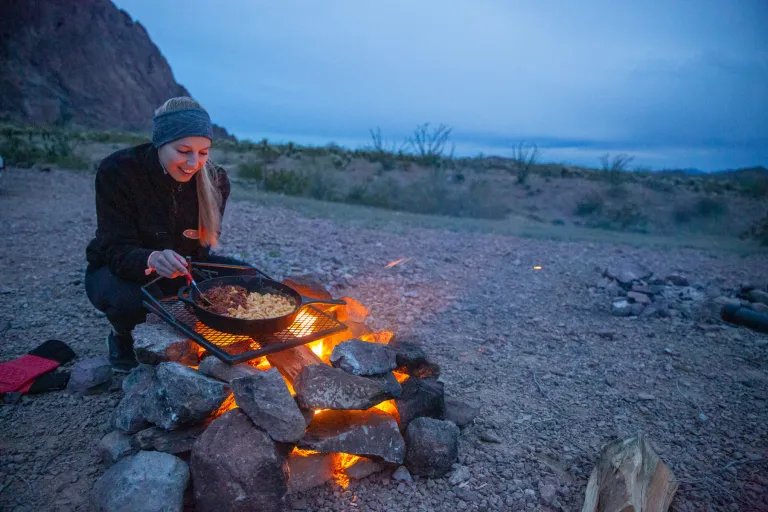
The lifetime warranty that AdjustaGrill offers reflects genuine confidence in construction quality. Our products have proven themselves across decades of use in the harshest environments, from Grand Canyon expeditions to commercial river guide operations.
Safety, Stability, and Real-World Load Capacity
A rugged fire pit grate for hunting must sit level and stable on uneven ground. Wobbly grates spill hot food, create burn hazards, and damage cookware. Proper stake design anchors the grate firmly regardless of terrain. Most hunting locations feature rocky, sloped, or irregular ground, your equipment must perform anyway.
Real-world load capacity testing reveals what marketing claims hide. A grate rated for 30 pounds should handle 30 pounds safely, not barely survive it. The best field equipment includes a safety margin, capacity that exceeds typical loads so you never approach failure points. Cast iron cookware, water, and food add weight quickly; your grate must handle this without flexing or tilting.
Stability also depends on grate geometry. A wider base distributes weight better than narrow designs. Proper stake length anchors deeply enough to resist tipping when you're moving cookware around. The swing-away motion should operate smoothly without binding, which can cause sudden shifts that destabilize your setup.
Safety regulations for open fires vary by location and season. Many states and federal lands have specific rules about fire pit construction and operation. Check local regulations before your trip.
Choosing the Right Grate for Your Hunting Setup
The right choice depends on your specific hunting situation. Solo backpackers need ultralight, compact designs. River guides running commercial trips need industrial-grade durability and rapid setup. Backyard hunters might prioritize cooking capacity over portability. Your decision should match your actual use case, not aspirational outdoor fantasies.
Consider these practical factors: How far do you pack gear? How many people do you cook for? What cookware do you own? How many trips per year? A rugged fire pit grate for hunting that's perfect for one hunter might be wrong for another.
AdjustaGrill's patented stake grill design handles most hunting scenarios effectively. The collapsible construction packs small, the adjustable height gives real temperature control, and the heavy-duty steel handles years of field use. Our customers include solo hunters, commercial guides, and casual campers, all finding the same reliable performance.
Frequently Asked Questions
What should I look for in a fire pit grate for hunting camp?
Prioritize heavy-gauge steel construction, adjustable height or swing-away motion for temperature control, and a design that handles cast iron and Dutch ovens. Look for models with carrying handles for portability, rust-resistant finishes, and a lifetime warranty or proven track record. Stability is critical, the grate must sit level over uneven ground and support full cookware loads without tipping.
What size fire pit grate is best for camp cooking?
Size depends on group size and cookware. Solo hunters typically need 12-18 inches of cooking surface; small groups (2-4 people) benefit from 20-24 inches. Larger hunting camps with multiple Dutch ovens should choose 28-36 inches. Verify the grate dimensions match your fire pit opening and account for ash and ember management underneath. Adjustable grates let you raise or lower the surface to control heat intensity without changing grate size, making them versatile across different cooking tasks.
Are adjustable campfire grill grates worth it for hunting?
Yes, adjustable campfire grill grates offer significant advantages for hunting camps. They let you control cooking temperature by raising the grate away from heat or lowering it closer to coals, eliminating the need to move cookware or wait for fire intensity to change. Swing-away or rotating designs speed up cooking and reduce burn risk. The trade-off is slightly more setup time in camp, but experienced hunters find the precision control and safety benefits justify the investment, especially on multi-day trips where meal quality matters.
How do you maintain a steel fire pit grate after hunting season?
After each use, brush off ash and food residue while the grate is still warm. For long-term storage, dry the grate completely, apply a light coat of oil to prevent rust, and store it indoors or under cover. If rust spots appear, scrub with a wire brush and re-oil. Grates with high-temperature finishes resist rust better than bare steel. Check carrying handles and any moving parts (swing hinges, adjustable brackets) for corrosion. A lifetime warranty typically covers manufacturing defects but not maintenance neglect, so regular cleaning extends grate life significantly.
Hunting trips fail when equipment fails. A quality rugged fire pit grate for hunting isn't a luxury, it's the foundation of reliable field cooking. AdjustaGrill's lifetime-warranted stake grills feature patented adjustable motion, heavy-gauge steel construction, and collapsible designs that pack into any backpack. Get started with AdjustaGrill and cook like a professional in the backcountry.
Leave a comment