
Is an Adjustable Campfire Grill Worth It? A 2026 Guide

Table of Contents
- Is an Adjustable Campfire Grill Worth It? The Short Answer
- What an Adjustable Campfire Grill Actually Costs
- Campfire Cooking Heat Control: Why Height Changes Everything
- Dutch Oven Campfire Cooking on a Stake Grill
- Campfire Grill Setup: Ground, Stake Depth, and Stability
- Campfire Grill Maintenance and Long-Term Ownership
- How It Compares: Swivel Grills, Tilt Grates, and Fixed Grates
- Conclusion: Who Should Buy One
- Frequently Asked Questions
Last Updated: October 16, 2026
Is an Adjustable Campfire Grill Worth It? The Short Answer
An adjustable campfire grill is worth it if you cook over an open fire more than a few times a year and you're tired of food that's burnt outside and raw inside.
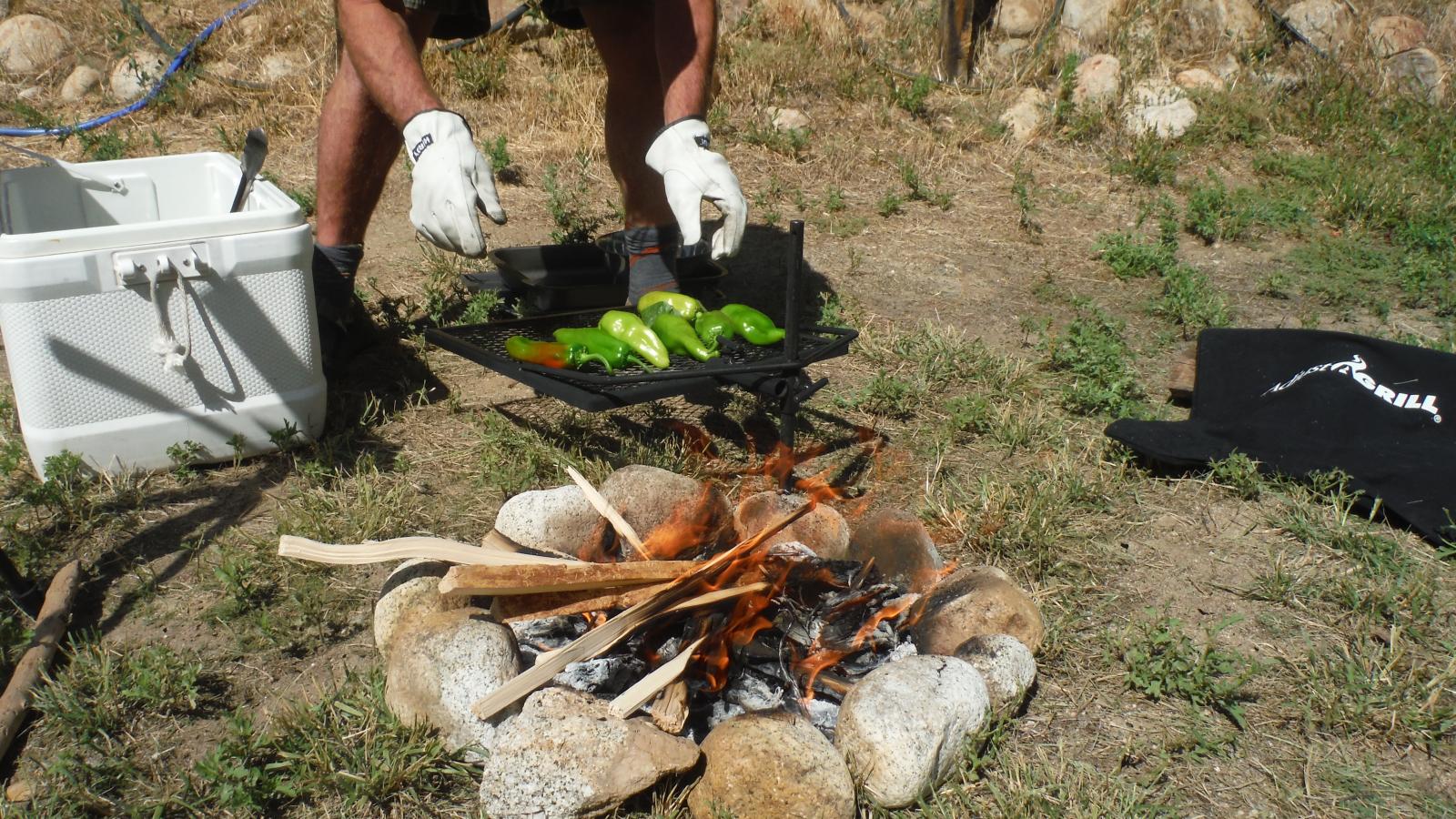
At AdjustaGrill, we've been building stake grills since 1994, so we've watched this question come up for three decades. Here's the honest version: a fixed grate gives you one heat zone.
Below, we'll break down what these grills cost, how heat control actually works, how to set one up, and who should skip it entirely.
What an Adjustable Campfire Grill Actually Costs
The price range is wider than most people expect, and the cheap end is where the frustration lives. A basic fixed grate runs a few dollars. Our own Adjust-A-Grill is $65, and the web special on the same patented stake grill is $50.

What you're paying for is steel and geometry:
- 13-gauge expanded diamond mesh grate, 16 x 16 inches
- Solid 5/8-inch tapered carbon steel stake, about 23 inches long
- Triangulated 3/8-inch support bar
- 10 oz cotton canvas storage bag
Cheap grates use thin wire that sags under a Dutch oven. That's the real cost difference. A $20 grate that warps after one season isn't cheaper than a $50 grill that outlives your truck.
The Cost-vs-Benefit Math Nobody Runs
Here's the comparison most articles skip. Line up the four realistic options and look at what each one actually costs you over a few seasons:
| Option | Upfront | What It Does Well | Where It Falls Short |
|---|---|---|---|
| Rocks and a fire ring | Free | Nothing to pack, nothing to lose | No height control, no swing-away, uneven heat, leaves a scar |
| Fixed grate | A few dollars | Roasting, simple burgers | One heat zone, no adjustment, thin wire sags |
| Folding grate | Modest | Packs small, fine for light cooking | Still one zone unless you move coals, no cast iron |
| Adjustable stake grill | $50-$65 | Height control, swing-away, handles cast iron | Costs more up front, needs ground to drive the stake |
The honest way to think about it: an adjustable grill is worth it when the number of real meals you cook over fire is high enough that heat control stops being a nice-to-have.
What you're really buying is control. A fixed grate gives you one heat zone. An adjustable grate gives you a dial.
If you're cooking on a permitted river or in a fire-pan area, factor in a fire pan as part of the same purchase.
Campfire Cooking Heat Control: Why Height Changes Everything
Heat control on an open fire comes down to distance. Move the grate up and the food cooks slower. Move it down and you get a sear. That's it. No dials, no knobs, just inches.
Most people cook too close to the coals. They get a flare-up, char the outside, and serve chicken that's still pink in the middle. The fix isn't a better marinade. It's raising the grate.
Here's how we think about zones on a stake grill:
- High position: warming, slow cooking, finishing thick cuts
- Mid position: the workhorse range for burgers, chicken, vegetables
- Low position: searing steaks, getting a crust fast
Let your fire burn down to coals before you start cooking. Flames are for looking at. Coals are for cooking. A bed of coals gives you steady heat you can actually manage by moving the grate.
The support bar on our grill slides the grate up and down level. That matters more than it sounds. Many swivel grills change height by tilting the grate, and a tilted grate rolls round foods like hot dogs and brats toward the fire. A level grate keeps everything where you put it.
Dutch Oven Campfire Cooking on a Stake Grill
Dutch oven campfire cooking works on a stake grill because the grate handles the weight. You hang the oven over coals, adjust height for a simmer, and you're baking biscuits at a campsite.
The catch is stability. A light grate flexes and dumps your chili. Our 16 x 16 inch grate holds cast iron without drama.
A few things we've learned:
- Set the oven over coals, not flames
- Rotate the oven a quarter turn every 15 minutes for even heat
- Use the swing-away motion to check food without lifting a hot lid over your hands
- Keep a lid on it. Every peek costs you heat
Campfire Grill Setup: Ground, Stake Depth, and Stability
Campfire grill setup takes under a minute once you've done it twice. Drive the stake, swing the grate over the fire, adjust height. That's the whole process.
Stake depth depends on the ground. In normal soil, the stake usually only needs to go about 3 to 4 inches, because the ground acts as the ballast. In soft ground like a bog, it may need about 12 inches, and the grill still works.
What you're standing on matters more than the grill:
Adjust-A-Grill | Heavy Duty Patented Portable Campfire Grill Since 1994 →
| Ground Type | Stake Depth | What to Expect |
|---|---|---|
| Firm soil or gravel bar | 3-4 inches | Solid, no wobble |
| Packed dirt with roots | 4-6 inches | Good hold, check after an hour |
| Sand or loose gravel | 6-12 inches | Works, but seat it deep |
| Bog or saturated mud | About 12 inches | Still functional, watch for settling |
If you're cooking on a permitted river or in a fire-pan area, pair the stake grill with a fire pan. Our CampFire Portable Fire Pit has a stainless steel mesh floor, and you can drive the stake straight through it for a complete setup. Always use a fire blanket under any fire pan. Rules change yearly, so check current requirements with the managing agency before you launch.

Campfire Grill Maintenance and Long-Term Ownership
Campfire grill maintenance is mostly about keeping rust off bare steel and keeping the pivot working. Ten minutes after a trip saves you a season of grief.
Our routine:
- Brush the grate while it's still warm, using a wire brush
- Wipe the stake and support bar with a lightly oiled rag
- Check the fasteners and the swivel arm before each trip
- Store it dry in the canvas bag, never damp
Expanded steel and carbon steel will surface-rust if you leave them wet. That's normal and it's not a defect. A quick scrub and a coat of oil brings it back.
The thing nobody tells you about cheap grills is that the pivot is the first part to fail.
How It Compares: Swivel Grills, Tilt Grates, and Fixed Grates
The comparison comes down to how each design changes cooking height, and that single difference decides how well you can cook.
| Design | How Height Changes | Main Trade-Off | Best For |
|---|---|---|---|
| Fixed grate | It doesn't | One heat zone, no control | Occasional hot dogs |
| Tilt-style swivel | Grate tilts up or down | Round food rolls toward fire | Light, quick cooking |
| Level-slide stake grill | Grate slides level | Costs more up front | Real cooking, cast iron |
In our experience, the VEVOR look-alike uses a hollow 1 1/4-inch tube for its stake. A wider tube has to be driven in noticeably further than our solid 5/8-inch stake.
We won't tell you we're better in every way. A fixed grate is fine if you're roasting marshmallows twice a summer.
Campsite Constraints That Decide Whether It Works
Before you buy any adjustable grill, check the site. These practical limits matter more than the spec sheet:
- Fire-ring size. Many established rings are sized for a fixed grate. A stake grill needs room to drive the stake outside the ring and swing the grate over the coals. Measure or eyeball the ring before you commit.
- Ground conditions. Firm soil or a gravel bar holds the stake at 3 to 4 inches. Sand, loose gravel, or a bog may need 6 to 12 inches, and the grill still works, but seat it deep and recheck it after an hour.
- Stake placement. You want the stake driven where the grate can swing clear of the fire and where you can stand without stepping in the coals. Pick that spot before you light anything.
- Site rules. Some areas require a fire pan, some require a fire blanket under the pan, and some restrict fires entirely during dry periods. Rules change yearly, so confirm current requirements with the managing agency before every trip.
Fire-Pan Requirements to Know
If you're cooking in a fire-pan area, the pan specs are not optional. Grand Canyon National Park (revised Dec 2024) requires a metal fire pan of at least 300 sq in, a 3-inch lip on all sides, elevated on manufactured legs, with a fire blanket under the pan. The Middle Fork of the Salmon (Forest Service) requires a fire-resistant pan with at least 144 sq in of fire surface, sides at least 2 inches high, and a fire blanket under the pan. We're stating these as the agencies publish them.
Never leave a fire unattended, and always keep water or a shovel within reach. A fire blanket goes under any fire pan, every time.
The Bottom Line on the Comparison
The design question is simple. Do you want one heat zone or a dial? If you want a dial, you want a grate that slides level, not one that tilts. A tilted grate rolls round foods like hot dogs and brats toward the fire. A level-slide grate keeps everything where you put it, and it handles cast iron without drama. That's the difference that decides whether the grill earns its keep at your camp.
Conclusion: Who Should Buy One
Buy an adjustable campfire grill if you cook real meals over fire, own cast iron, or feed a group at camp. Skip it if you're a marshmallow-and-hot-dog camper twice a year. That's the honest line.
For everyone in between, the math favors one good grill over three disposable ones. Ours weighs about 9 pounds, packs flat, and sets up in under 60 seconds in our experience.
Check current fire rules for your area before every trip, and always keep water or a shovel within reach.
Cheers to Great Grilling.
Frequently Asked Questions
Is an adjustable campfire grill worth it for regular camping trips?
If you cook over a fire more than a few times a year, yes. An adjustable campfire grill lets you raise the grate to cool the fire down or lower it to sear, which a fixed grate cannot do. That control means fewer burnt meals and less food lost to the flames. The AdjustaGrill Stake Grill starts at $65, or $50 through the web special, and carries a lifetime warranty against manufactured defects.
What are the advantages of an adjustable stake grill over a fixed grate?
A fixed grate locks you into one cooking height, so you manage heat by moving coals around or waiting for the fire to die down. A stake grill slides the grate up and down level, and swings it completely away from the fire when you need to flip or pull food. The AdjustaGrill support bar keeps the grate level as it moves, so round foods like hot dogs and brats stay put instead of rolling toward the coals.
Can an adjustable campfire grill hold a Dutch oven?
Yes. The AdjustaGrill Stake Grill handles Dutch ovens and cast iron. Drive the stake, swing the 16 x 16 inch grate over the coals, and set the oven on top. For Dutch oven campfire cooking, use the height adjustment to dial in a steady temperature: lower for a hard sear, raise for a slow simmer. Always keep a fire blanket or approved fire pan under the fire and check current campground rules before you go.
How deep should a stake-style campfire grill be driven into the ground?
In our experience, the AdjustaGrill stake usually only needs to go about 3 to 4 inches into firm ground because the ground itself acts as the ballast. In soft ground like a bog, it may need around 12 inches, and the grill still works. Push the stake in until it feels solid, then give the grate a light tug to confirm it is stable before you add food.
Leave a comment