
7 Best Woods for Open Fire Cooking, Ranked

Quick Summary
Oak is the best all-around wood for open fire cooking because it burns long and steady, produces reliable coals, and has a mild flavor that suits most foods. Hickory is the strongest choice for ribs, sausages, and game, while alder suits fish and poultry. Always use seasoned hardwood, since green wood smokes and struggles to hold heat.
- Oak gives a long, steady burn and dependable coals for slow cooks.
- Hickory adds strong, bacon-like smoke that suits red meat and game.
- Alder produces delicate smoke that works well for fish and poultry.
- Use seasoned wood, because green wood hisses, smokes, and struggles to hold heat.
- Adjust cooking heat by moving the grate higher or lower, not by adding more wood.
Table of Contents
- Why Wood Choice Matters for Open Fire Cooking
- How We Ranked the Seven Woods
- 1. Oak: The Steady Workhorse for Long Cooks
- 2. Hickory: Strong Flavor for Meat and Game
- 3. Maple: Mild, Even Heat for Everyday Meals
- 4. Ash: Clean Burning and Easy to Control
- 5. Birch: Quick Starts and Bright Coals
- 6. Alder: Delicate Smoke for Fish and Poultry
- 7. Fruitwood: Sweet Smoke for Pork and Vegetables
- Choosing and Storing Dry Firewood
- Fire Management for Cooking
- Frequently Asked Questions
7 Best Woods for Open Fire Cooking, Ranked
Last Updated: October 26, 2026
Why Wood Choice Matters for Open Fire Cooking
The wood you burn decides more than you might think. It sets how hot your fire runs, how long the coals last, and how much smoke ends up on your food. Get the wood right and your cook is easier. Get it wrong and you spend the evening chasing flare-ups or scraping soot off your dinner.
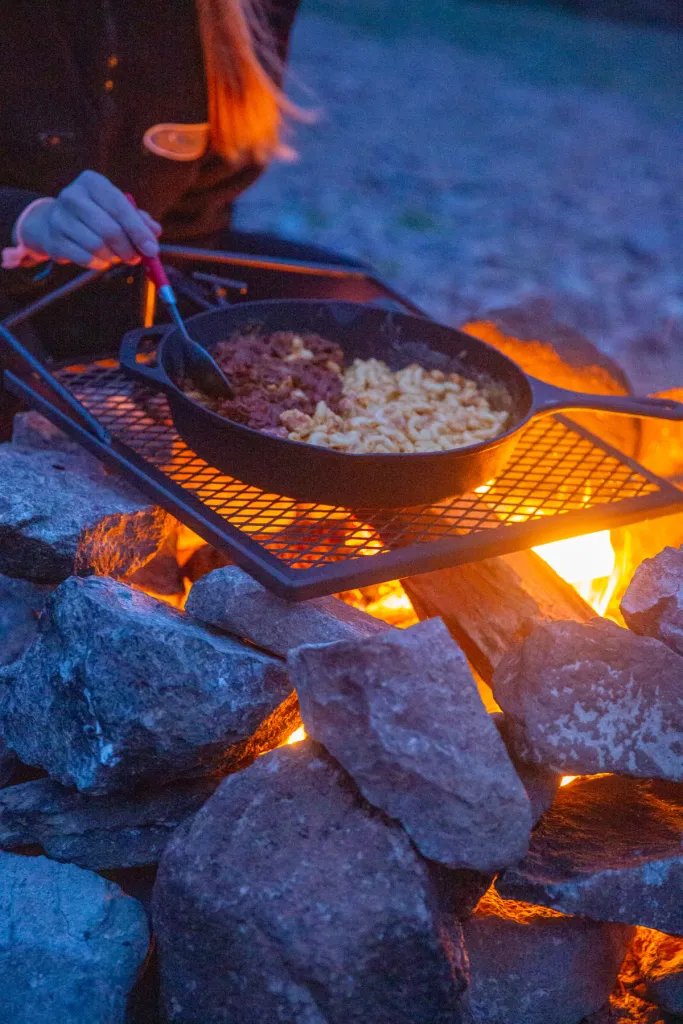
Open fire cooking rewards good wood. Dense hardwoods burn longer and leave a bed of steady coals. Soft, resinous wood flares up fast, throws sparks, and can taste bitter. Green wood with high moisture content hisses, smokes, and struggles to hold heat at all. Seasoned wood, with its moisture dropped to a level where it burns clean, is what you want.
This guide ranks seven woods based on how they perform at the grate. Each one has a clear strength and a clear limit, and we point out where each fits best.
How We Ranked the Seven Woods
Your ranking may shift depending on what grows near you. A campsite in the Rockies will not have the same wood as one in the Southeast, so use this list as a starting point.
Before you cook, check current fire rules for your area. Burn bans and firewood transport limits change, and many parks now require you to buy or source wood locally.
Here is how the seven woods compare at a glance, using the strengths and limits covered in each section.
| Wood | Best for | Key difference |
|---|---|---|
| Oak | Long, slow cooks | Steady burn, mild flavor |
| Hickory | Ribs, sausages, game | Strong, bacon-like smoke |
| Maple | Everyday camp meals | Even, predictable heat |
| Ash | Beginners | Clean burn, low smoke |
| Birch | Starting fires, searing | Lights easily, burns fast |
| Alder | Fish and poultry | Delicate, subtle smoke |
| Fruitwood | Pork and vegetables | Sweet, mellow aroma |
1. Oak: The Steady Workhorse for Long Cooks
Oak burns hot, lasts a long time, and produces a dependable bed of coals. For a setup that handles the fire itself, see the portable fire pan built for open fire cooking. For a slow roast or a Dutch oven stew, oak gives you the steady heat you need.
Oak's flavor is mild enough to suit most foods, including beef, pork, and vegetables. It won't overpower a simple seasoning.
Pros:
- Long, steady burn
- Produces even, reliable coals
- Mild flavor that suits most foods
Cons:
- Takes longer to get going than softer woods
- Needs to be well seasoned to avoid smoke
2. Hickory: Strong Flavor for Meat and Game
Hickory is dense and hot-burning, and it puts out a strong, bacon-like flavor. It's a favorite for ribs, sausages, and game. Use it with restraint, because too much hickory can make food taste harsh.
Hickory produces excellent coals, but it burns hotter than oak, so it needs closer watch.
Pros:
- Strong, classic smoke flavor
- Hot, long-lasting coals
- Excellent for red meat and game
Cons:
- Can overpower delicate foods
- Burns hot and fast without attention
3. Maple: Mild, Even Heat for Everyday Meals
Maple gives you a clean, even heat with a light sweetness. It's good for everyday camp meals like eggs, chicken, and fish you want to keep gentle. It's also a solid choice when you want a fire that doesn't surprise you.
Maple is widely available in many parts of the country, which makes it an easy pick. It burns steadily and leaves a manageable amount of ash.
Pros:
- Even, predictable heat
- Light, sweet flavor
- Widely available
Cons:
- Less coal volume than oak or hickory
- Flavor is subtle for bold dishes
4. Ash: Clean Burning and Easy to Control
Ash is one of the most practical woods around a campfire. It burns clean with little smoke and produces good coals. It's a forgiving wood, which makes it a good choice for newer cooks learning fire management.
Ash splits easily and dries reasonably fast, so it's often ready to use sooner than the denser hardwoods. Its mild flavor works for most meals.
Pros:
- Clean burn with low smoke
- Easy to split and season
- Forgiving for beginners
Cons:
- Flavor is lighter than hickory or oak
- Can burn fast if logs are small
5. Birch: Quick Starts and Bright Coals
Birch is excellent for getting a fire going. Its bark catches easily and burns bright, which makes it a great starter. Once the fire is up, you can add denser wood for longer cooking.
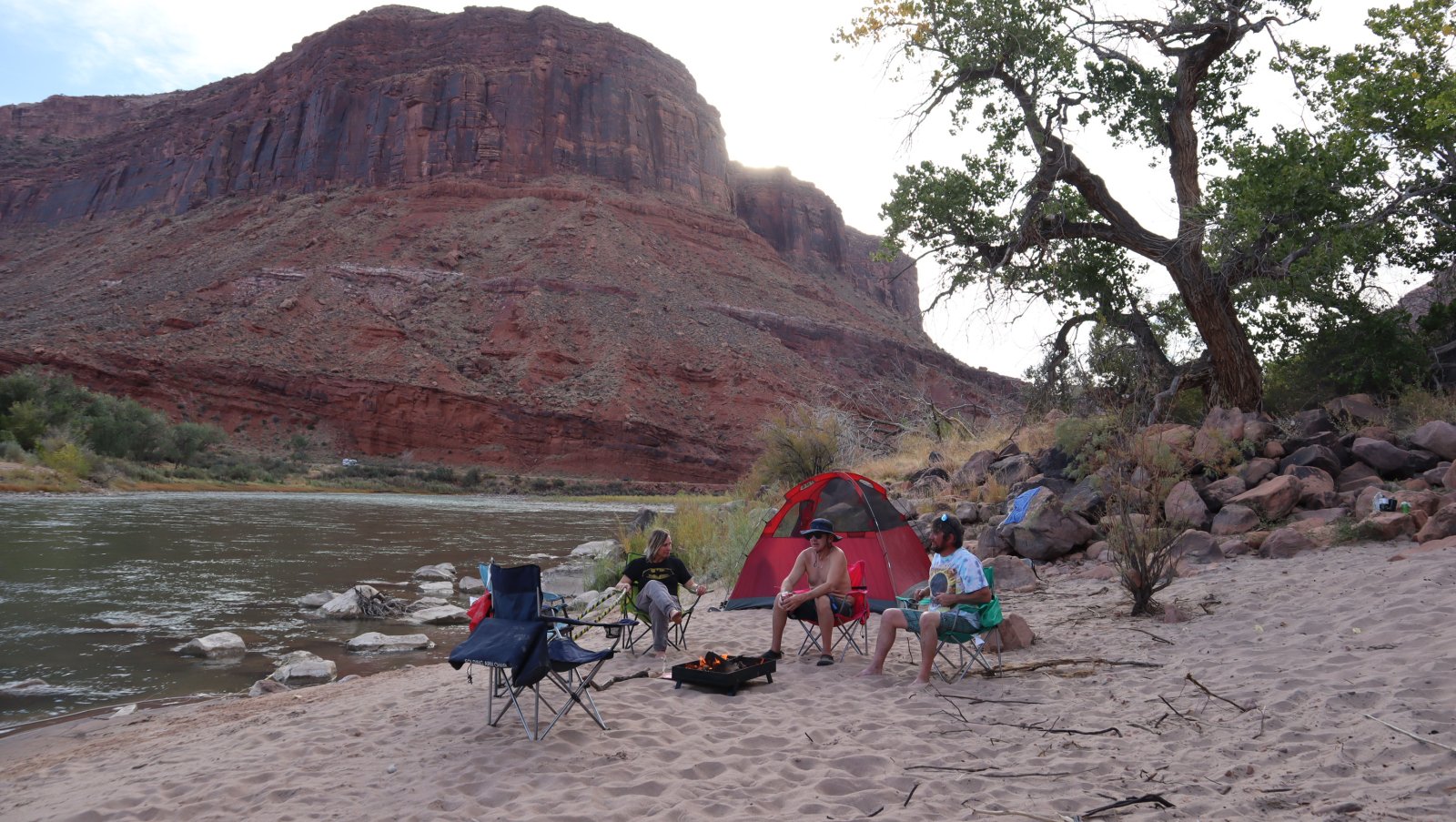
Birch burns quickly, so it isn't the best choice for a long roast. It does produce bright coals that work well for searing. Its smoke is light and clean.
Pros:
Adjust-A-Grill | Heavy Duty Patented Portable Campfire Grill Since 1994 →
- Easy to ignite, even with damp conditions
- Bright, hot coals for searing
- Light, clean smoke
Cons:
- Burns fast, so it needs replenishing
- Not ideal for long, slow cooks
6. Alder: Delicate Smoke for Fish and Poultry
Alder produces a light, delicate smoke that suits fish and poultry well. It's the classic choice for salmon over an open fire, and it won't overwhelm a mild piece of meat.
Alder is a softer wood that burns at a moderate temperature. It's less useful for hot, long cooks, but it shines when you want subtle flavor.
Pros:
- Delicate smoke flavor
- Excellent for fish and poultry
- Moderate, controllable heat
Cons:
- Softer wood with a shorter burn
- Less suited to long, hot cooks
7. Fruitwood: Sweet Smoke for Pork and Vegetables
Apple, cherry, and other fruitwoods add a sweet, mellow smoke. They work well with pork, chicken, and roasted vegetables. Fruitwood burns at a moderate rate and produces a pleasant aroma.
Use fruitwood in small amounts. Its flavor is pleasant but can turn heavy if you load the fire. Pair it with the lighter woods in this list for balance.
Pros:
- Sweet, mellow flavor
- Pleasant aroma
- Good with pork and vegetables
Cons:
- Flavor is easy to overdo
- Availability depends on your region
Choosing and Storing Dry Firewood
Whatever wood you choose, dry it properly. Seasoned wood usually needs several months to a year to reach a low moisture content, depending on species and climate. Split the wood, stack it off the ground, and cover the top so rain can't soak in while the sides breathe.
How to tell dry from green. Dry wood sounds hollow when two pieces knock together, has cracks running along the ends, and feels light for its size. Green wood does the opposite and fights your fire every step of the way. A moisture meter takes the guesswork out; most practitioners aim for wood in the 15 to 20 percent moisture range for cooking.
Buy local, burn local. Many public lands restrict firewood transport to slow the spread of pests and disease. The safe habit is to buy or gather wood as close to your campsite as rules allow, and never haul firewood long distances.
Never cook over contaminated wood. Skip treated, painted, stained, glued, or composite wood entirely. Skip moldy or rotten wood. Skip resinous softwoods like pine and fir for cooking; they flare, throw sparks, and can leave a bitter taste.
Store it right at camp. Keep your cooking wood off the ground on a pallet or a couple of poles, and cover only the top. A tarp wrapped all the way around traps moisture and grows mold.
Formats matter. Logs are for the coal bed and long burns. Chunks are for adding smoke and heat mid-cook. Chips burn fast and are best for a quick smoke hit, not for sustained heat. Match the format to the job: logs for a Dutch oven bake, chunks for grilling, chips for a short, smoky finish.
Fire Management for Cooking
Good wood still needs good fire management. Flame is uneven, it licks one spot hotter than the next, and it deposits soot. Coals are what cook.
Build the ember bed first. Start your fire 45 to 60 minutes before you plan to cook. A collapsible charcoal chimney lets you light coals without lighter fluid.
Cook on coals, not flame. Rake the coals into an even layer with a stick or a shovel. If you need a hot zone and a warm zone, push coals to one side.
Control heat with distance, not with more wood. Heat falls off fast as you move food away from the coals. For more on keeping an even cook over a steady fire, read how to cook evenly over fire. You can see how the swivel campfire grill handles heat control over different fires.

Replenish by cooking method. For a long roast or a Dutch oven stew, add a split or two every 30 to 40 minutes and keep the coal bed steady. For grilling, add a handful of small splits or chunks when the coals start to gray over, about every 20 to 30 minutes. For a quick sear, build a hot, shallow bed and cook fast.
Manage flare-ups. Fat dripping onto coals causes flare-ups. Move the food to the warm zone until the flame dies down, or spread the coals slightly. Do not spray water on a cooking fire unless you have to; it throws ash and steam onto your food.
Dutch oven heat. For a Dutch oven, set it on a flat bed of coals and put a few coals on the lid. The coals underneath drive the bottom heat and the coals on top drive browning.
If you want a contained fire, the CampFire Portable Fire Pit has a stainless steel mesh floor that holds coals and embers; only fine ash passes through, so always use it over a fire blanket. Browse the CampFire portable fire pit for its folding legs and steel pan. Check current rules for your area before you head out.

Frequently Asked Questions
What woods should I avoid burning for open-fire cooking?
Avoid softwoods like pine, spruce, and fir for cooking. They throw a lot of sap, pop and spark, and leave sooty smoke that coats food with a bitter, resinous taste. Avoid treated lumber, painted wood, plywood, pallets, and any wood with glue or chemical finishes, because these release harmful fumes. Stick to clean, dry, untreated hardwood split into manageable pieces. If you are unsure whether a piece is safe, do not cook over it.
Is oak or hickory better for cooking over an open fire?
Both are excellent, and the choice depends on the meal. Oak burns long and steady and makes a reliable bed of coals, so it is a good all-round pick for long cooks. Hickory burns hotter and gives a stronger, bacon-like smoke that suits beef, pork, and game. In our experience, oak is the safer choice when you are unsure, and hickory is the one to reach for when you want bold flavor on red meat.
How dry should firewood be before cooking over it?
Use seasoned wood that has been split and dried for at least six months, ideally a year. Properly seasoned wood feels light for its size, has cracks at the ends, and gives a sharp sound when two pieces knock together. Green wood hisses, smokes heavily, and makes it hard to hold a steady temperature. Store your wood off the ground under cover with airflow so it stays dry until you need it.
How do I know when a campfire is ready for cooking?
Wait until the flames have died down and the wood has turned into glowing coals with a light gray ash on top. Visible flames mean the heat is uneven and the smoke is heavy. A good cooking bed is even, steady, and glowing, and you can hold your hand about 6 inches above it for only a few seconds. Build your coal bed to the size of your cooking surface, and add small wood as you go to keep it going.

Leave a comment