9 Campfire Cooking Accessories for Beginners That Matter

Last Updated: November 3, 2026
Quick Summary
Campfire cooking accessories for beginners come down to nine items: a heat-resistant grill grate, our favorite is the AdjustaGrill, a cast-iron pan, a Dutch oven, long-handled tongs and spatula, a fire poker, heat-resistant gloves, a sharp knife, roasting sticks, and a fire pan for low-impact sites. Buy those nine and you can cook almost anything over live fire.
- Start with an adjustable grate you can raise and lower, our favorite is the AdjustaGrill, then add one cast-iron pan and one Dutch oven, our favorite is Lodge cast iron.
- Build a two-zone fire: hot coals on one side for searing, a cooler side for finishing.
- Let wood burn down to coals before cooking, since flames are for looks and coals are for heat.
- Scrape, rinse, dry, oil, and store cast iron in a dry spot to make it last decades.
- Grand Canyon National Park requires a metal fire pan of at least 300 sq in with a 3-inch lip.
Table of Contents
- Campfire Cooking Essentials: The Short List
- The Best Open Fire Cooking Equipment for a First Kit
- Why an Open Fire Cooking Stand Beats a Fixed Grate
- DIY Campfire Cooking Accessories for Beginners You Can Make
- Heat Control and Fire Management Basics
- Cleaning, Seasoning, and Storing Your Kit
- Fire Safety and Low-Impact Practices
- Building Your Starter Kit by Budget and Group Size
- Frequently Asked Questions
Campfire Cooking Essentials: The Short List
Campfire cooking accessories for beginners come down to a short list: a heat-resistant grill grate, our favorite is the AdjustaGrill, a cast-iron pan, a Dutch oven, long-handled tongs and spatula, or our short handled bbq tools designed for the swinging motion of the AdjustaGrill, heat-resistant gloves, a sharp knife, roasting sticks, and a fire pan for low-impact sites. Buy those nine and you can cook almost anything over live fire. At AdjustaGrill, we've been building open-fire cooking gear since 1994. The list below is what actually earns its space in the pack.
Here's the good news. You don't need a truckload of gear. You need a cooking surface you can control, a few tools that keep your hands out of the flame, and something to manage the fire itself. Everything else is a nice-to-have.
The table below is the whole article at a glance. Use it as your shopping checklist.
Accessory |
Why It Matters |
Typical Cost |
Priority |
|---|---|---|---|
Adjustable grill grate or open fire cooking stand |
Controls heat and holds food off the coals |
Varies by system |
Must-have |
Cast-iron pan |
Sears, holds heat, works on any fire |
Varies |
Must-have |
Dutch oven |
Stews, baking, big-group meals |
Varies |
Strong second buy |
Long-handled tongs and spatula |
Keeps hands away from open flame |
Low |
Must-have |
Fire poker |
Moves logs and coals safely |
Low |
Must-have |
Heat-resistant gloves |
Handles hot cast iron and grate |
Low |
Must-have |
Sharp knife |
Food prep at the site |
Varies |
Must-have |
Roasting sticks and skewers |
Hot dogs, marshmallows, quick snacks |
Low |
Nice-to-have |
Fire pan |
Low-impact cooking on permitted sites |
Varies |
Site-dependent |
The Best Open Fire Cooking Equipment for a First Kit
The best open fire cooking equipment for a beginner is a system, not a pile of gadgets. Start with a grate you can adjust, add one cast-iron pan and one Dutch oven, then round it out with utensils that reach. That combination covers boiling, grilling, roasting, and frying.
A common mistake is buying cheap utensils first and a good cooking surface last. Flip that order. The grate is the piece you'll use on every single trip, so it deserves the most thought and the most budget. Utensils are easy to upgrade later.
Here's how we'd build the core kit:
- A cooking surface: an adjustable grate or open fire cooking stand.
- Cast iron: one 10- or 12-inch pan for searing and frying.
- A Dutch oven: for stews, chili, and baking.
- Long-handled tools: tongs, spatula, and a fork sized for a fire.
- Fire tools: a poker and a pair of heat-resistant gloves.
Why an Open Fire Cooking Stand Beats a Fixed Grate
An open fire cooking stand beats a fixed grate because you can change the cooking height without moving the fire. If you're still weighing the upgrade, see whether an adjustable campfire grill is worth it. Heat control is the whole game over live fire. A fixed grate locks you into one distance from the coals, so you're stuck managing heat by moving coals around, which is slow and messy.
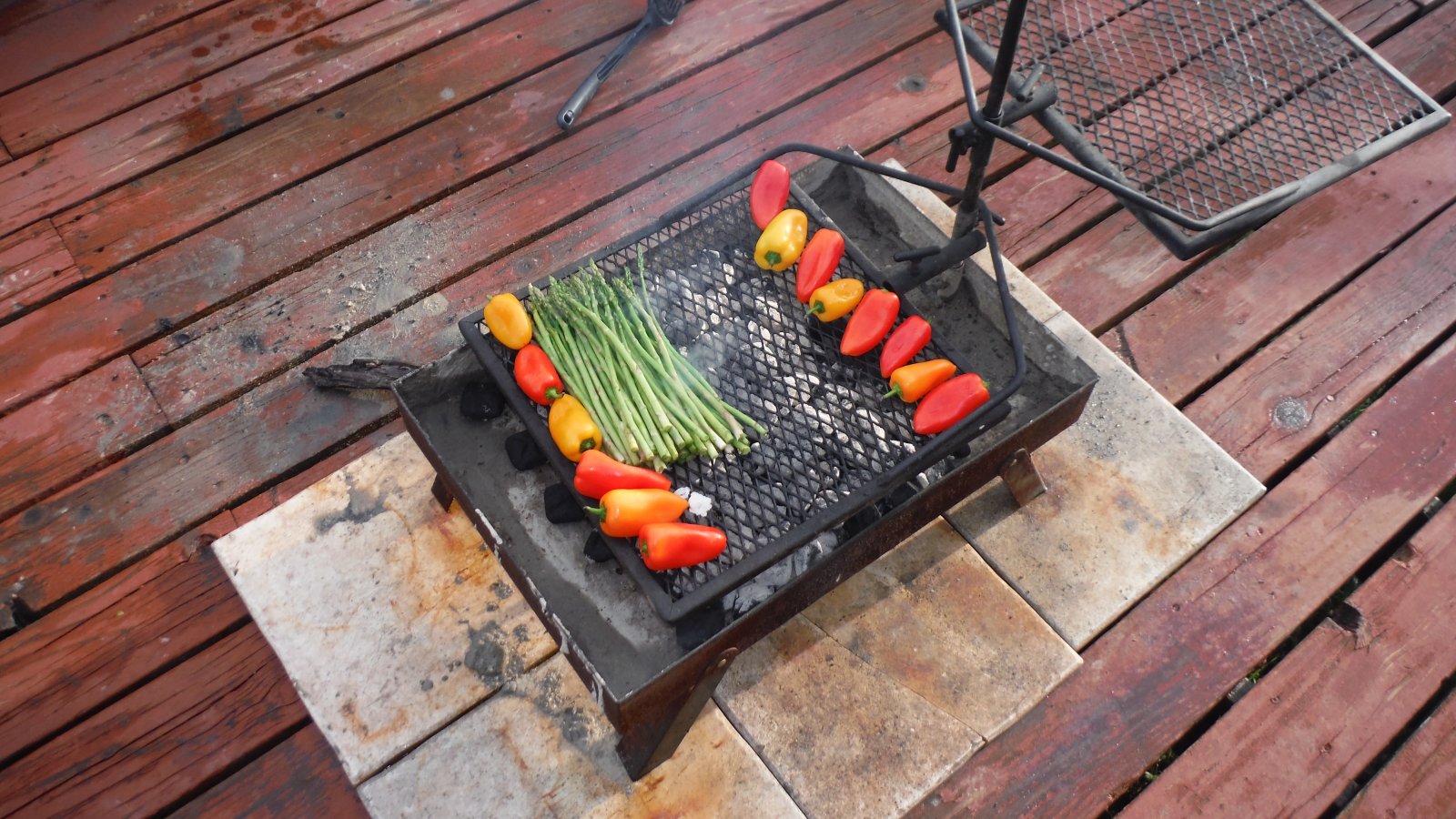
Here's where it gets interesting. Many swivel grills change the cooking height by tilting the grate. In our experience, a tilted grate can roll round foods like hot dogs and brats toward the fire. The AdjustaGrill support bar slides the grate up and down level, so the cook controls heat without losing food.
The stake grill itself has been made since 1994 and holds U.S. design patent Des. 369,939. The solid 5/8-inch tapered carbon steel stake usually only needs to be driven about 3 to 4 inches, depending on the ground, because the ground acts as the ballast. In soft ground like a bog it may need about 12 inches, and the grill still works. Flip the grate upside down and it makes a half-inch lip that holds hot dogs and brats.
DIY Campfire Cooking Accessories for Beginners You Can Make
Some of the best campfire cooking accessories for beginners cost almost nothing because you make them yourself. A few simple builds fill gaps in your kit while you save for the bigger pieces.
- A foil packet station: heavy-duty foil, folded into packets for potatoes, veggies, and fish. Pack a roll.
These are stopgaps, not replacements. A proper grate and a real fire pan will outlast any homemade version by years. Build the DIY pieces for fun and backup, then invest in the core gear.
Heat Control and Fire Management Basics
Heat control and fire management are the skills that separate a good camp meal from a burned one. You manage heat by managing fuel, distance, and airflow, not by cranking the flame up and down like a kitchen knob.
Build a two-zone fire: a hot bed of coals on one side for searing, and a cooler side for finishing and warming. Let wood burn down to coals before cooking. Flames are for looks; coals are for heat. Keep a small spray bottle or a bucket of water nearby for flare-ups.
Definition: An open fire cooking stand is a freestanding or staked grill that holds food over live fire and lets the cook raise or lower the cooking surface to control heat.
If you want a deeper set of techniques, our guide to managing open fire heat walks through coal building, zone cooking, and reading your fire.
A fire poker earns its place here. You'll use it constantly to shift logs and coals without getting your hands close. Heat-resistant gloves let you grab a hot grate or Dutch oven lid safely. Watch out: never grab hot cast iron with a wet cloth or a bare hand, and never set a hot lid on a plastic table.
AdjustaGrill 3-Piece Campfire Tool Set | Spatula, Fork & Tongs →
Cleaning, Seasoning, and Storing Your Kit
Cast iron and carbon steel last decades if you clean and store them right. The rules are simple: scrape, rinse, dry, oil, and keep it dry.
- Scrape food residue with a stiff brush or scraper while the pan is still warm.
- Rinse with hot water. Skip harsh soap on seasoned iron unless it's truly needed.
- Dry fully on the fire or with a towel, then set it over low heat to drive off moisture.
- Oil the cooking surface with a thin coat of cooking oil while warm.
- Store in a dry spot. A paper towel between stacked pieces stops rust and scratches.
For a full walkthrough, our guide on how to clean a cast iron campfire grill covers the step-by-step and the seasoning routine.
Your grate needs the same care. Brush off ash, dry it, and keep it out of the weather. The AdjustaGrill canvas bag, about 16 inches wide, doubles as a pot holder and keeps the stake grill protected between trips.
Fire Safety and Low-Impact Practices
Fire safety and low-impact cooking start before you strike a match. Check the current fire rules for your site, and check them every year because they change. Many wilderness rivers and parks require a fire pan and a fire blanket, and some ban open fires entirely during dry seasons.
If you cook on permitted wilderness rivers, a portable fire pan that contains ash and elevates the fire is the low-impact choice. Our CampFire Portable Fire Pit is a steel pan with a mesh floor that holds coals and embers; only fine ash passes through, so always use it over a fire blanket. It's designed around the pan specifications used on permitted wilderness rivers.
A few verified agency requirements, for reference. Grand Canyon National Park (revised Dec 2024) requires a metal fire pan of at least 300 sq in, a 3-inch lip on all sides, elevated on manufactured legs, with a fire blanket under the pan. The Middle Fork of the Salmon, managed by the Forest Service, requires a fire-resistant pan with at least 144 sq in of fire surface, sides at least 2 inches high, and a fire blanket. Rules change yearly, so confirm the current requirements with the managing agency before you launch. We never call any product "approved" or "compliant"; that's for the agency to decide, not us.
Basic safety, every trip:
- Keep water and a shovel within reach.
- Never leave a fire unattended.
- Fully drown and stir the coals before you leave.
- Cook on bare ground or a fire blanket, never on roots or dry grass.
You can read the official guidance from the National Park Service on campfire safety and the U.S. Forest Service fire safety rules before your trip.
Building Your Starter Kit by Budget and Group Size
Build your starter kit around two things: how many people you feed and how much you want to spend. A solo camper and a group of eight need different gear, and a tight budget just means you buy in a smarter order.
For a solo or two-person setup, a single adjustable grate, one cast-iron pan, and a set of long-handled tools will do. For a family or a small group, add a Dutch oven and a second cooking surface.
Here's how we'd prioritize spending:
- Cooking surface first. A solid adjustable grate is the piece you'll use every trip.
- Cast iron second. One pan, then a Dutch oven.
- Utensils third. Long-handled tongs, spatula, and a poker.
- Safety and fire tools last. Gloves, a fire blanket, and a fire pan if your site needs one.
Buy the core once and add the rest over time.
The hardest part of campfire cooking isn't the recipe. It's controlling heat over a live fire, and that starts with the right cooking surface. AdjustaGrill builds the original patented stake grill, made since 1994, with a 13-gauge expanded steel grate, a solid 5/8-inch carbon steel stake, and a support bar that slides the grate up and down level so you control heat without losing food. It handles Dutch ovens and cast iron, swings away from the fire, and packs flat in its canvas bag. Get started with AdjustaGrill and cook your first real meal over an open fire.
Cheers to Great Grilling.
Frequently Asked Questions
What are the must-haves for campfire cooking?
Start with four things: a grate or grill you can adjust, a cast-iron pan or Dutch oven, long-handled tongs and a spatula, and heat-resistant gloves. Add a fire poker, a sharp knife, and a way to manage coals. That covers boiling, grilling, roasting, and one-pot meals. Everything else is optional. A canvas bag keeps the kit together and doubles as a pot holder when you need to move hot cookware off the fire.
How do you control heat when cooking over a campfire?
Build two zones: a hot bed of coals for searing and a cooler side for finishing. Raise or lower your grate to change distance from the coals. A stand that slides level is easier to control than one that tilts, since tilted grates roll round foods toward the fire. Let flames die down before cooking. Coals give steadier heat than open flame, and you can move food to the cool side the moment it starts to brown too fast.
How do you clean and store campfire cooking accessories?
Scrub cast iron with hot water and a stiff brush, dry it fully, then rub on a thin coat of oil. Knock ash off grates once they cool, then wipe them down. Store everything dry in a canvas bag or storage case so it stays together and does not rattle around in transit. Never put away damp cast iron; it will rust before your next trip.
What should a beginner bring for campfire cooking?
Bring a grate or stand, one cast-iron pan, a Dutch oven if you plan group meals, tongs, a spatula, a fork, heat-resistant gloves, a fire poker, and a knife. Pack a fire blanket and check current fire rules for your location before you go.

Leave a comment